Roonly vs Gong: Best Fit for Field Sales Teams
Gong dominates inside sales intelligence but lacks field recording, AI roleplay, and automated training that D2D teams need. Roonly is purpose-built for field sales.
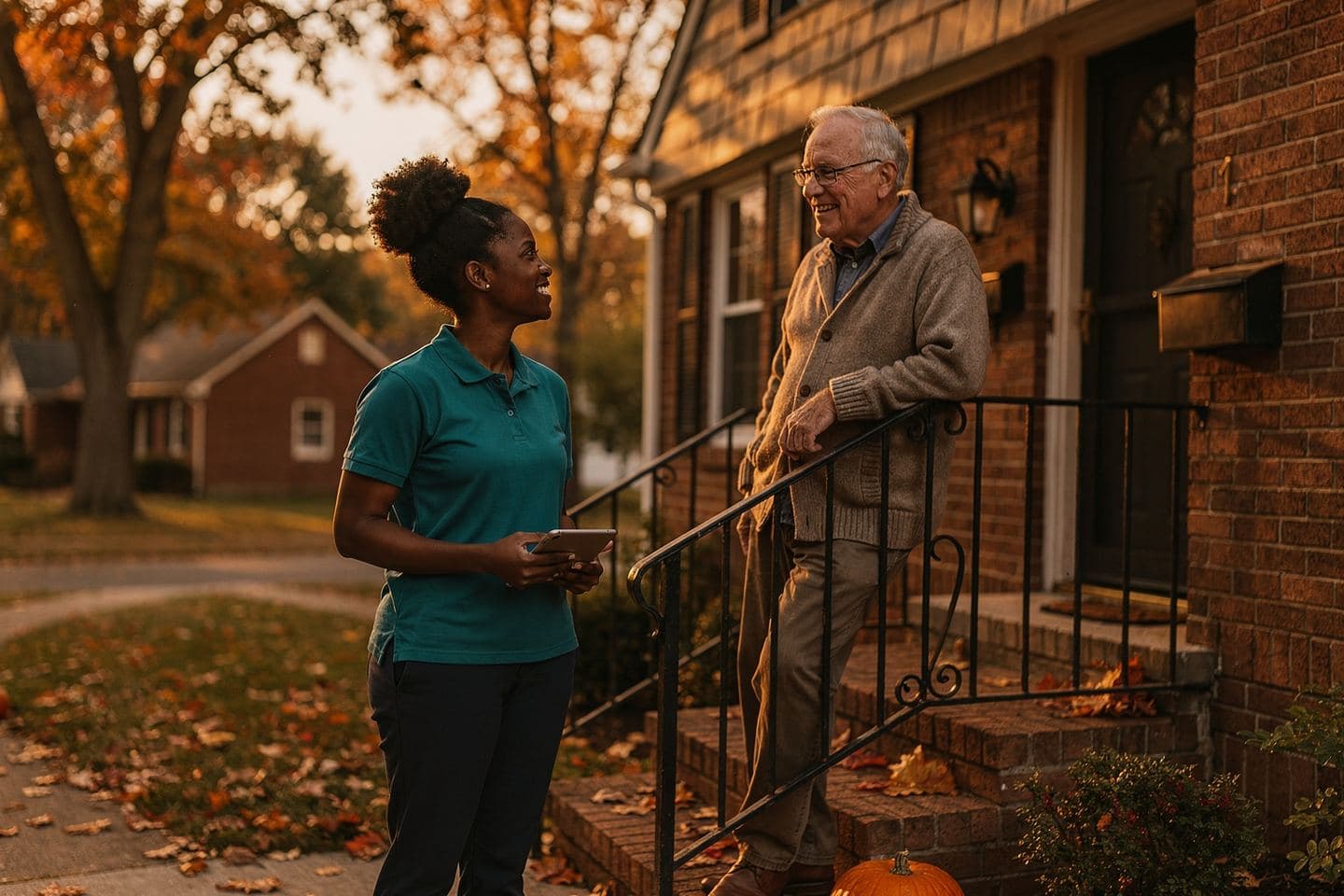
Roonly vs Gong for Field Sales: Which Platform Fits Your Team?
Gong dominates inside sales intelligence but lacks field recording, AI roleplay, and automated training that D2D teams need. Roonly is purpose-built for field sales.
Gong is the market leader in revenue intelligence. With over 4,500 customers and $300M+ in annual recurring revenue (Gong Press Release), the platform has earned its reputation by capturing phone calls, video meetings, and emails for inside sales teams. But if you run a door-to-door sales team in pest control, solar, roofing, or HVAC, the comparison between Roonly and Gong is less about which is "better" and more about which actually works for your use case.
Gong was designed for reps who sell from a desk. Roonly was designed for reps who sell on a doorstep. That distinction shapes every feature, every workflow, and every pricing decision. This comparison breaks it down so you can evaluate the right fit for your field sales operation.
Feature Comparison: Roonly vs Gong for D2D Teams
| Feature | Roonly | Gong |
|---|---|---|
| Built For | Door-to-door and field sales | Inside sales (phone, video, email) |
| Field Recording | Phone + Apple Watch, offline-first | No field recording capability |
| AI Roleplay | Sub-2-second responses, 500+ dynamic personas | Not available |
| Automated Training | Lessons auto-generated from real sales data | Not available |
| Conversation Analysis | Post-conversation scoring, stage-level tracking | Post-call analysis, deal intelligence |
| Offline Support | Full offline recording, syncs when connected | Requires internet connection |
| Apple Watch Recording | Yes | No |
| CRM Integration | Supabase-native, lightweight | Deep CRM integrations (Salesforce, HubSpot) |
| Skill Gap Detection | Auto-identifies weaknesses, assigns targeted drills | Manager-driven coaching recommendations |
| Deal Forecasting | Not available | Advanced pipeline and forecast analytics |
Gong excels at capturing digital sales interactions and extracting deal intelligence from them. Roonly excels at capturing in-person field conversations and turning them into automated rep training. If you want to understand how the coaching loop closes automatically, the workflow differences between these platforms are substantial.
Pricing Comparison: What D2D Teams Actually Pay
Gong restructured its pricing in March 2025 with a modular, a-la-carte model. The numbers below reflect reported pricing from multiple independent sources.
| Cost Component | Roonly | Gong |
|---|---|---|
| Per-User Cost | Custom quote (AI roleplay, term and team size) | $1,600/year (Foundations tier) |
| Platform Fee | None | $50,000/year |
| Setup/Implementation | None | Custom (varies by deployment) |
| Add-Ons | All features included | Forecast: $700/user/year, Engage: $800/user/year |
| Minimum Seats | No minimum | Enterprise minimums apply |
| 10-Rep Annual Cost | Custom quote | $66,000+ (before add-ons) |
| 25-Rep Annual Cost | Custom quote | $90,000+ (before add-ons) |
Sources: Oliv.ai Gong Pricing Guide, Tropic Gong Pricing
For a 10-person D2D team, Gong's platform fee alone is $50,000 a year, on top of $1,600 per user, and Gong does not include field recording, AI roleplay, or automated training. Roonly quotes on your real team instead: the price depends on how much AI roleplay your reps need, the term and team size.
The pricing gap widens further when you add Gong's optional modules. Forecast ($700/user/year) and Engage ($800/user/year) push total costs well above $3,000 per user per year for the full platform. Revenue organizations using AI reported 29% higher sales growth according to Gong's own 2024 research, but the ROI calculation only works if the tool matches how your reps actually sell.
Use-Case Fit: Best for Each Platform
Gong is best for:
- Inside sales teams running phone calls, video demos, and email sequences
- Enterprise organizations (100+ reps) with complex deal cycles and pipeline forecasting needs
- Revenue operations teams that need deep CRM analytics and deal intelligence
- Companies where sales happen digitally and every interaction is already recorded
Roonly is best for:
- Door-to-door sales teams (5-50 reps) in pest control, solar, roofing, and HVAC
- Field sales operations where conversations happen in person, not on a phone or video call
- Companies where managers are stretched thin and need automated rep training
- Teams that want reps improving between doors through AI roleplay and Duolingo-style lessons
- Organizations looking for 70% faster onboarding and reduced dependence on ride-alongs
The U.S. door-to-door sales industry generates $36 billion annually (Knock.io D2D Statistics), and the teams driving that revenue sell in person. Gong was not built for that environment. You would not use a tool designed to analyze Zoom calls to coach a rep standing on a porch in Phoenix.
What Gong Does Well (for Inside Sales)
Gong earned its market position in inside sales intelligence.
Conversation intelligence at scale. Gong captures and analyzes phone calls, emails, and video meetings across large sales organizations. It surfaces patterns like which talk tracks win deals and which objections stall pipelines. Gong was recognized in Gartner's 2025 Magic Quadrant for Revenue Action Orchestration. None of this applies to in-person field sales conversations, which Gong cannot record.
Deal forecasting and CRM integration. Gong's pipeline analytics predict which deals will close, and deep integrations with Salesforce and HubSpot automate data flow. These are enterprise inside sales features. D2D teams running 5-50 reps in pest control or solar do not typically need pipeline forecasting at this level, and the $50,000 platform fee reflects that enterprise positioning.
Where Gong Falls Short for D2D Teams
Despite its strengths, Gong has fundamental gaps that make it a poor fit for door-to-door and field sales operations.
No field recording at all. This is the core issue. Gong captures digital interactions: phone calls routed through VoIP, video meetings, and emails. It has no mechanism for recording in-person conversations at a doorstep, inside a home, or on a job site. D2D reps do not sell over Zoom. Without field recording, there is nothing for Gong to analyze. Platforms with Apple Watch recording and training built from real conversations solve this gap entirely.
No offline capability. D2D reps work in neighborhoods with spotty cell coverage. Gong requires a live internet connection to capture and process interactions. A tool that drops conversations when signal fades is unreliable for field use. The D2D market is projected to reach $269 billion by 2029 (Gitnux D2D Statistics), and the reps driving that growth need tools that work offline.
No AI roleplay. Gong does not offer AI-powered roleplay for practicing sales conversations. For inside sales teams, this may not matter as much because call recordings serve as review material. For D2D reps who need to sharpen their pitch between doors, the absence of roleplay means no way to practice objection handling against realistic resistance.
No automated training. Gong surfaces insights and recommends coaching actions, but every training session, lesson, and practice drill depends on a manager's time. For a D2D team where one manager oversees 10-15 reps spread across a territory, waiting for manager-led coaching sessions means most reps never get coached. Teams with AI coaching see 20-40% increases in rep sales performance, but only if coaching actually reaches every rep consistently.
Enterprise pricing for enterprise problems. A $50,000 annual platform fee makes sense for a 200-person inside sales org closing six-figure deals. It does not make sense for a 15-person pest control team. The pricing model reflects who Gong was built for, and it was not built for field sales verticals running lean operations.
The Roonly Difference: Built for the Field
Gong solves inside sales problems well. Roonly solves field sales problems that Gong was never designed to address.
Record anywhere, with anything. Roonly records via phone or Apple Watch with full offline support. Reps tap their watch at the door and start recording. No phone in hand, no internet required, no missed conversations. Audio syncs automatically when the rep reconnects.
The data flywheel. Every recorded conversation feeds Roonly's analysis engine. The engine scores performance at the stage level (opener, value prop, objection handling, close), identifies skill gaps per rep, and auto-generates targeted training content. This cycle compounds: the more conversations your team records, the better the training becomes. Understanding what top-performing D2D reps do differently is only useful if you can transfer those behaviors to the rest of your team.
Sub-2-second AI roleplay with 500+ personas. Roonly's roleplay engine responds in under 2 seconds with dynamic personas trained on real company scenarios. These are not generic sales bots. They simulate the specific objections, resistance patterns, and personality types your reps encounter in the field. The personas hold firm and push back, preparing reps for real conversations instead of letting them practice against a pushover.
Automated lessons, not manual coaching. When Roonly detects a rep struggling with a specific objection or sales stage, it auto-generates a targeted lesson. Reps get Duolingo-style drills between appointments, based on real interactions from their own team. No manager needs to build a training deck or schedule a coaching session. Organizations report 50% reduction in time to productivity when reps can self-train on relevant, real-world content.
Does the paperwork and recovers the revenue. A recorded door or tech visit becomes the CRM record in FieldRoutes or JobNimbus, with the outcome, summary, quote and promises and the recording linked, and the same engine works the winbacks, unscheduled quotes and upsells the conversation surfaced, by text from a named person on the team, with a win counted only when the CRM shows it. Gong does neither.
Frequently Asked Questions
Can Gong record door-to-door sales conversations?
No. Gong captures phone calls, video meetings, and emails through digital integrations. It does not have the ability to record in-person conversations at a doorstep or inside a home. Roonly is designed specifically for field recording via phone and Apple Watch, with full offline support.
Is Gong worth the price for a small D2D team?
For most D2D teams under 50 reps, Gong's pricing does not make financial sense. The $50,000 annual platform fee plus $1,600 per user per year adds up quickly, and the platform lacks field recording, AI roleplay, and automated training. A 15-rep D2D team would pay over $74,000 per year for Gong.
Does Gong offer AI roleplay for sales practice?
No. Gong focuses on post-call analysis and deal intelligence rather than active training tools. Roonly offers AI roleplay with sub-2-second response times and 500+ dynamic personas that simulate real field sales scenarios, including specific objection types and homeowner personalities.
Can I use Gong and Roonly together?
In theory, yes, but there is limited practical overlap for field sales teams. Gong would only capture your inside sales or phone-based follow-ups, while Roonly would capture your field conversations. Most D2D companies do not need both since their primary sales interactions happen in person, not on calls.
How does Roonly's pricing compare to Gong's?
Roonly's pricing is custom: it depends on how much AI roleplay your team needs, the term and team size, with no commission, ever. Gong costs $1,600 per user per year plus a $50,000 annual platform fee, with additional charges for modules like Forecast ($700/user/year) and Engage ($800/user/year), so a 10-rep team runs $66,000+ a year on Gong. See pricing for a Roonly quote on your real team.
What industries is Roonly built for?
Roonly is purpose-built for door-to-door and field sales teams in pest control, solar, roofing, HVAC, and other home services verticals. Gong serves enterprise inside sales teams across tech, SaaS, financial services, and other industries where sales happen digitally.
Does Gong work offline?
No. Gong requires an active internet connection to capture and process sales interactions. Roonly records offline and syncs data automatically when the device reconnects, which is critical for reps working in residential neighborhoods with inconsistent cell coverage.
Related guides


Published February 23, 2026. Last updated October 6, 2026.
See what Roonly finds in your team's conversations.
Roonly coaches every in-person sales conversation and trains each rep on exactly where they lose the sale.
Book a demo