AI Sales Coaching for Home Services
AI sales coaching for home services records field conversations, scores rep performance against a playbook, and auto-generates personalized training for HVAC, pest control, roofing, and solar reps.
What Is AI Sales Coaching for Home Services?
AI sales coaching for home services records field conversations, scores rep performance against a playbook, and auto-generates personalized training for HVAC, pest control, roofing, and solar reps.
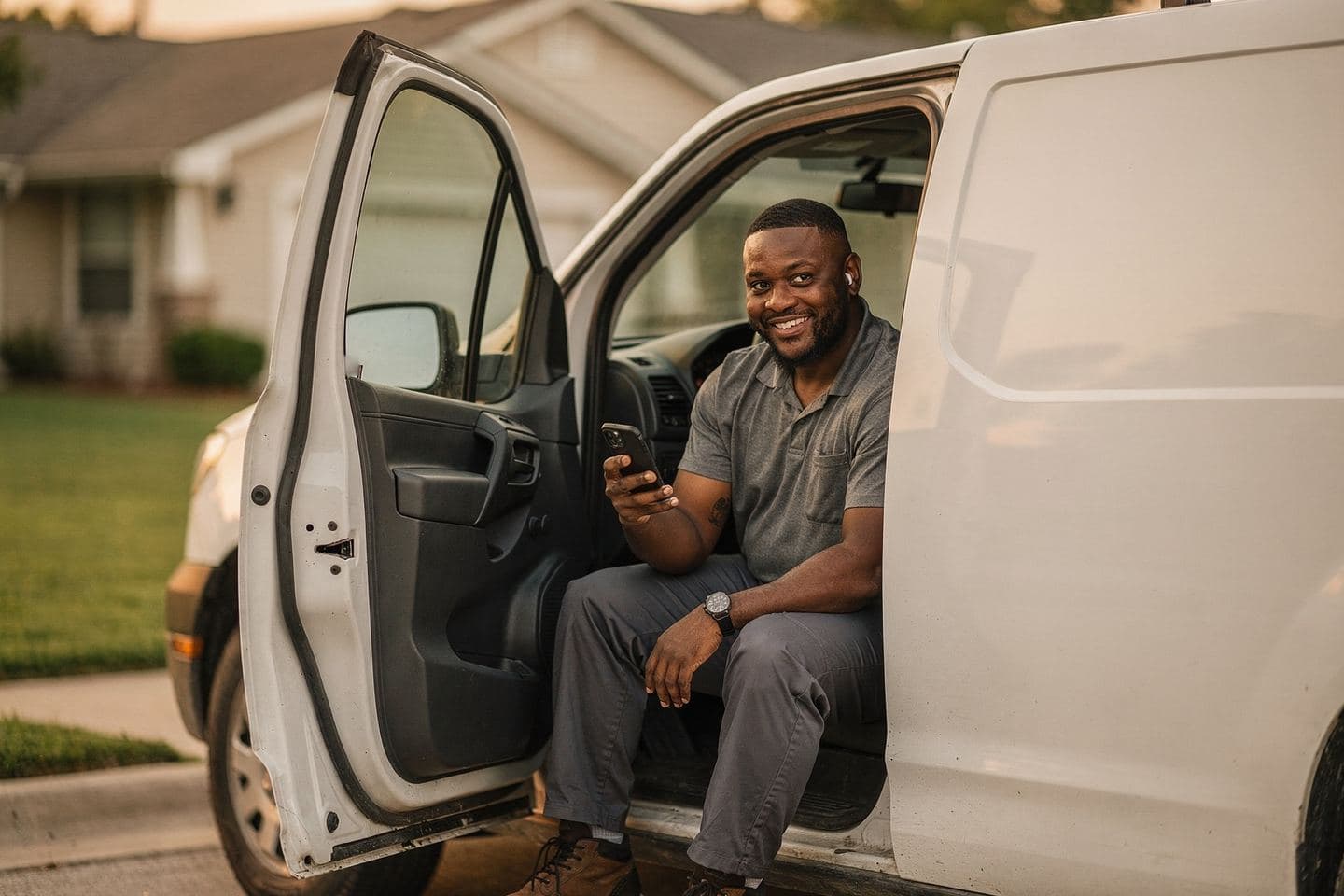
Home services is a broad category that includes any company sending reps to a customer's door or property: pest control technicians, HVAC comfort advisors, roofing estimators, solar consultants, and window or siding salespeople. The U.S. home services market is valued at over $543 billion and is forecast to grow 5.3% per year through 2030, according to Marketdata Enterprises. That growth means more reps in the field, more conversations at the door, and a widening gap between companies that coach effectively and those that do not.
AI sales coaching applies to this industry by solving a problem unique to field sales: managers cannot be in the room (or on the porch) for every conversation. Traditional coaching relies on ride-alongs, but a manager who shadows one rep per day covers each team member once or twice a month at best. AI coaching records every conversation, analyzes it against the company's sales process, and delivers feedback and training without requiring a manager to be present.
Why AI Coaching Matters for Home Services Teams
Home services sales is personal, high-stakes, and largely unobserved. A pest control rep standing on a homeowner's porch has about 90 seconds to earn trust before the door closes. An HVAC comfort advisor sitting at a kitchen table is navigating a $10,000-$20,000 decision. These conversations happen dozens of times per day across a team, and historically, nobody hears them except the rep and the prospect.
That lack of visibility creates three expensive problems.
Slow ramp times. New reps in home services typically take 3 to 6 months to reach average performance. AI coaching cuts that timeline significantly. According to SalesAsk's ROI analysis, the top 15% of home services companies using AI coaching achieved a 4-month reduction in ramp time and a median ROI of 28x. Even the middle 60% of adopters saw a 2-month ramp reduction and 12x ROI.
Inconsistent performance across the team. Research from MySalesCoach's 2026 State of Sales Coaching Report found that 45% of sales reps rate their coaching as below average, up from 29% the prior year. In teams where reps receive coaching weekly, 76% hit quota. When coaching drops to monthly, attainment falls to 56%. The gap between coached and uncoached reps is widening, and home services teams feel it acutely because field reps get the least face time with managers.
Manager bandwidth constraints. A sales manager running a 15-rep pest control team spends most of their time on ride-alongs and 1:1 meetings. That leaves little room for strategy, hiring, or territory planning. AI coaching multiplies manager capacity by handling the repetitive parts of coaching (reviewing conversations, scoring performance, assigning practice) so managers can focus on the work that requires human judgment.
How AI Coaching Works for Home Services in Practice
The workflow has three stages, and each one maps directly to how home services companies already operate.
Stage 1: Recording Field Conversations
The rep records sales conversations using a phone app or wearable device. For home services, the recording tool needs to work in varied environments: on a front porch, inside a crawl space during a pest inspection, on a rooftop during an estimate, or at a kitchen table during a comfort survey. Offline recording matters because cellular coverage is unreliable in rural territories and inside homes.
Some platforms support Apple Watch recording so reps can go phone-free, which is particularly useful during in-home walkthroughs where pulling out a phone feels awkward.
Stage 2: Analysis and Scoring
Once the conversation uploads, the AI transcribes it with speaker separation (distinguishing the rep from the homeowner), then scores performance against the company's playbook. For an HVAC company, that might mean grading the comfort survey questions, the system recommendation, the financing presentation, and the close. For pest control, it might score the initial inspection pitch, the treatment plan explanation, and the upsell to recurring service.
The analysis also extracts specific objections ("That seems expensive," "I need to talk to my spouse," "We already have a pest guy"), tracks sentiment shifts, and identifies missed opportunities. According to Kixie's research on coaching effectiveness, reps who receive feedback within 24 hours of a conversation are 2.5x more likely to improve compared to those who receive delayed feedback.
Stage 3: Personalized Training
This is where the real differentiation happens. Most conversation intelligence tools stop at analysis, leaving managers with dashboards full of data but no reduction in coaching workload. Advanced platforms connect analysis directly to training.
For example, if the AI detects that a roofing rep consistently loses deals at the financing stage, it generates targeted practice: a roleplay scenario where an AI-generated homeowner pushes back on monthly payments, using objections pulled from that rep's actual conversations. Platforms like Roonly automate this entire loop, generating personalized lessons and AI roleplay from real team data without requiring managers to build training content manually.
Key Metrics and Benchmarks for Home Services
The ROI data for AI coaching in home services is specific and well-documented. Here are the numbers that matter.
| Metric | Without AI Coaching | With AI Coaching | Source |
|---|---|---|---|
| Close rate improvement | Baseline | +18% to +35% | SalesAsk |
| Average ticket increase | Baseline | +7% to +12% | SalesAsk |
| New rep ramp time | 3-6 months | 1-2 months | Industry benchmark |
| Conversations reviewed by managers | 5-10% | 100% (automated) | Industry benchmark |
| Payback period | N/A | 60-90 days | SalesAsk |
One illustrative case: an HVAC company with 8 reps averaging 22% close rates implemented AI coaching and improved to 28% in year one. By year two, experienced reps reached 32% and new hires were ramping to 25% in just four months, according to SalesAsk's customer data.
The financial impact scales with team size. If AI coaching lifts close rates by even 5 percentage points across a 10-rep team, the revenue gain for most home services companies exceeds what the tools cost within the first quarter.
How AI Coaching Tools Serve Home Services Companies
The market for AI sales coaching in home services includes a mix of purpose-built field sales tools and broader platforms adapted from inside sales.
Purpose-built for D2D and field sales:
- Rilla focuses on conversation intelligence for in-home sales. It records and transcribes field conversations and provides scorecards and manager dashboards. Coaching and training remain manual.
- Siro records door-to-door conversations and maps them to custom playbooks. Like Rilla, the platform stops at analysis. Training falls on managers.
- Roonly closes the loop between analysis and training automatically. After scoring a conversation, it generates Duolingo-style lessons and AI roleplay scenarios from the rep's actual data. The AI roleplay responds in under two seconds with over 500 dynamic personas, compared to 5-7 second delays on other platforms. Pricing is custom, quoted on your real team (AI roleplay, term and team size).
Adapted from inside sales:
- Gong and Chorus are powerful conversation intelligence platforms, but they are built for phone and video calls in enterprise sales environments. They lack field-specific features like offline recording, outdoor noise handling, and in-person conversation dynamics.
For home services companies evaluating options, the key question is whether the tool was built for field sales verticals or retrofitted from an inside sales product. The recording environment, conversation dynamics, and coaching needs are fundamentally different when your reps are standing on porches instead of sitting at desks.
| Feature | D2D-Specific Tools | Inside Sales Tools |
|---|---|---|
| Outdoor recording | Yes | No |
| Offline support | Yes (most) | No |
| In-person dynamics | Optimized | Not designed for it |
| Automated training | Some (Roonly) | No |
| Pricing | Custom quote, or up to ~$330/rep/month | Enterprise custom |
Common Misconceptions About AI Coaching in Home Services
"Home services reps are not tech-savvy enough for this." The tools are built to be simple. A rep taps "start" on their phone or Apple Watch before walking to the door. Everything else happens automatically. If a rep can use a CRM or dispatching app, they can use an AI coaching tool.
"Our sales process is too unique for AI to understand." Modern platforms are configured around your specific playbook, not a generic script. The AI learns your company's stages, your common objections, and your selling points. A solar company's sales process is different from a pest control company's, and the platforms account for that.
"AI coaching only helps big teams." The ROI math works for teams as small as 5 reps. A single-digit percentage improvement in close rates across even a small team pays for the tool within months. Smaller teams often see faster adoption because there is less organizational friction.
"Recording conversations is illegal or unethical." Recording laws vary by state (one-party vs. two-party consent), but most home services companies already operate in disclosure environments. Reps inform the homeowner that the conversation is being recorded for quality and training purposes. Most homeowners do not object when it is framed as professionalism.
"We tried call recording and it did not work." Call recording without analysis and training is just a library of audio files. The value of AI coaching is not in the recording itself but in what happens after: automated transcription, scoring, skill gap detection, and personalized training generation.
Frequently Asked Questions
What types of home services companies benefit most from AI sales coaching?
Any company sending reps to a customer's door or property: HVAC, pest control, roofing, solar, windows, siding, landscaping, and home security. The highest ROI typically comes from companies with higher-ticket products (HVAC, solar, roofing) where small improvements in close rates produce significant revenue gains.
How much does AI sales coaching cost for a home services team?
D2D-focused platforms run up to about $330 per rep per month, and some charge setup fees. Enterprise platforms like Gong use custom pricing that typically exceeds $300 per user. Roonly's pricing is custom: it depends on how much AI roleplay your team needs, the term and team size, with no commission, ever. See pricing for a quote on your real team.
How quickly do home services companies see ROI from AI coaching?
Most companies hit payback within 60-90 days. The top 15% of adopters see a median ROI of 28x, while the middle 60% see 12x ROI. New rep onboarding tends to show the fastest measurable improvement because AI fills the coaching gap that would otherwise require constant manager shadowing.
Can AI coaching handle the different sales processes across home services verticals?
Yes. Platforms are configured around your specific playbook and scoring criteria. A pest control company's sales process (inspection, treatment plan, upsell to recurring) is different from an HVAC company's (comfort survey, system recommendation, financing), and the AI adapts its analysis and training to each.
Does AI coaching work for in-home sales, not just door-to-door?
AI coaching works for any in-person sales conversation, whether it happens at the front door, during a property walkthrough, or at the kitchen table. The recording captures the full interaction regardless of where it takes place. In-home sales (like HVAC comfort surveys) often benefit even more because these are longer, higher-value conversations with more coaching surface area.
What happens if a rep forgets to start recording?
Most platforms offer reminders based on location or time. Some integrate with dispatching software to auto-prompt reps before appointments. The goal is to make recording a habit. Teams that tie recording rates to incentives (points, leaderboard position) typically reach 90%+ adoption within the first month.
Is AI coaching a replacement for ride-alongs?
AI coaching does not eliminate ride-alongs entirely, but it reduces the need for them dramatically. Instead of riding along to observe and gather feedback, managers can review AI-generated scorecards and focus ride-along time on targeted development. This shifts ride-alongs from a data-gathering exercise to a high-value coaching opportunity.
Related guides


Published March 12, 2026. Last updated October 6, 2026.
See what Roonly finds in your team's conversations.
Roonly coaches every in-person sales conversation and trains each rep on exactly where they lose the sale.
Book a demo