Field Sales Call Recording Software and Apps
Field sales call recording software automatically captures door-to-door conversations, transcribes them with speaker separation, and feeds AI coaching to improve rep performance.
What Field Sales Call Recording Software Actually Does
Field sales call recording software automatically captures door-to-door conversations, transcribes them with speaker separation, and feeds AI coaching to improve rep performance.
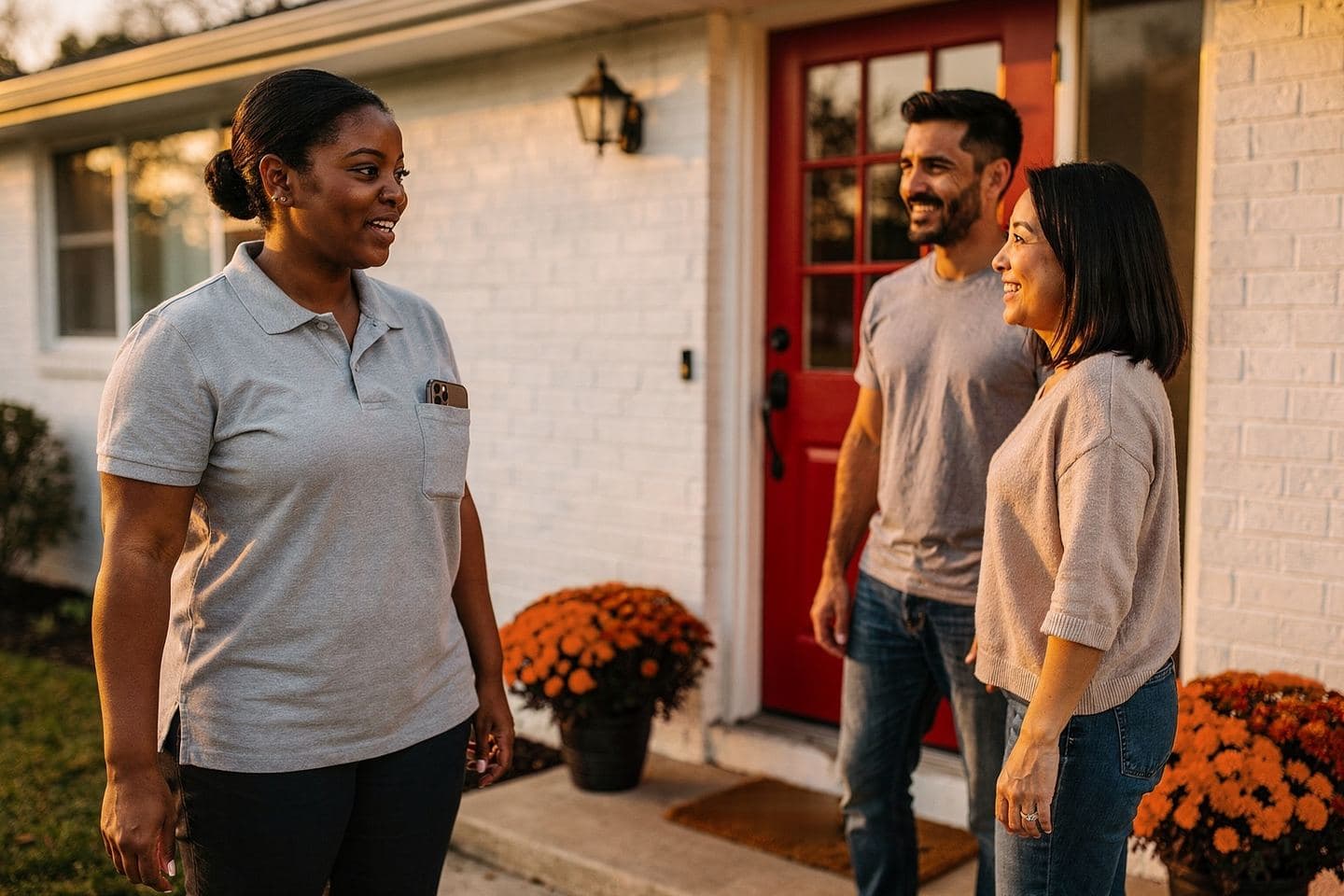
Most call recording tools are built for inside sales teams sitting at desks with headsets. Field sales is a different animal. Reps knock 40 to 80 doors per day, sell in driveways and on front porches, and deal with wind, dogs, lawnmowers, and spotty cell coverage. A field sales call recording software app has to work in those conditions or it collects dust.
The conversation intelligence market hit $28.54 billion in 2025 and is projected to reach $32.25 billion by 2026 at a 13% CAGR, according to Fortune Business Insights. That growth is driven by one insight: companies that record and analyze sales conversations close more deals. Yet only 20% of companies currently use call recording for coaching, even though 81% of high-growth companies already leverage recorded calls to improve performance. For field sales teams, the adoption gap is even wider because most tools simply were not designed for their environment.
The Problem: What Happens Without Call Recording in the Field
Sales managers running D2D teams of 10, 20, or 50 reps face a visibility problem that inside sales managers do not. Inside sales teams work from CRMs where every call is logged, recorded, and timestamped. Field sales managers get self-reported notes, if they get anything at all.
Coaching relies on ride-alongs that do not scale
A manager can ride along with one or two reps per day. On a team of 20, that means each rep gets observed roughly once every two weeks. According to ASLAN Training, coaching combined with training yields a 529% return on investment. But that return only materializes when coaching is consistent. Sporadic ride-alongs produce sporadic results. Meanwhile, the real cost of manual ride-alongs keeps compounding as the manager spends full days in the car instead of running the team.
Performance problems stay hidden
Without recordings, managers diagnose issues based on outcomes, not behaviors. A rep who closes at 12% instead of 20% could have a weak opener, poor objection handling, or a pricing presentation that confuses homeowners. The manager has no way to know which one without hearing the actual conversations. Research from Gitnux shows that organizations with structured coaching programs see 16.7% greater annual revenue growth, but structure requires data. Without recordings, coaching is guesswork.
New reps take too long to ramp
The average D2D sales company loses a significant number of new hires within the first 60 days. Replacing a sales rep costs 1.5x to 2x their annual salary when you factor in recruiting, training, and lost production. New reps who cannot listen to successful conversations from top performers learn only from the limited time a manager or senior rep can spend with them. That bottleneck extends ramp time and increases early turnover. Continuous coaching with recorded calls reduces new hire ramp-up time by 50%, but only if recordings exist in the first place.
How Roonly Solves Field Sales Call Recording
Roonly was built specifically for in-person, door-to-door sales recording. It is not an inside sales tool adapted for the field. Every design decision, from recording hardware to AI analysis, reflects how D2D teams actually operate.
Phone and Apple Watch recording
Reps can record from their phone or their Apple Watch. The Apple Watch option matters because D2D reps use their hands constantly: carrying samples, holding door hangers, gesturing through a pitch. Starting a recording with a single wrist tap takes less than 2 seconds and does not interrupt the interaction. Phone recording works the same way for teams that prefer it or do not have Apple Watches.
Offline-first architecture
Field reps work in neighborhoods where cell coverage drops. New construction zones, rural areas, and even some suburban streets have dead spots. Roonly records and stores audio locally on the device. When the rep returns to Wi-Fi or cell coverage, recordings sync automatically. No lost conversations because of a network glitch.
Automatic transcription with speaker separation
Every recording is transcribed using AssemblyAI's universal speech model with speaker diarization. The system distinguishes the rep from the homeowner, which means the AI analysis knows who said what. This matters for scoring: you cannot evaluate objection handling if you cannot tell which speaker raised the objection.
AI scoring across sales stages
Each conversation is scored on opener effectiveness, value proposition delivery, objection handling, and closing technique. Reps see their scores in the mobile app immediately after processing. Managers see team-wide trends in the web dashboard. No one has to listen to a single recording unless they want to drill into a specific conversation.
How It Works: Five Steps from Door to Dashboard
- Rep starts recording. One tap on the phone or Apple Watch before or during the conversation.
- Audio captured locally. The device stores audio regardless of cell coverage.
- Automatic upload. When connected, recordings sync to the cloud.
- AI transcription and analysis. Speaker separation, sentiment analysis, stage-level scoring, and objection extraction happen automatically.
- Results appear in app and dashboard. Reps get individual scorecards. Managers get team analytics, leaderboards, and flagged conversations that need attention.
The entire pipeline from recording to scored results requires zero manual input from the manager. That means a team of 30 reps producing 100 conversations per day can all be analyzed without adding headcount.
Metrics and Results: What Call Recording Delivers
The data on call recording and coaching is consistent across sources. Teams that record, review, and coach from real conversations outperform teams that do not.
| Metric | Without Recording | With Recording and Coaching |
|---|---|---|
| New rep ramp time | 8-12 weeks | 4-6 weeks |
| Close rate improvement | Baseline | 20-40% increase |
| Manager coaching capacity | 1-2 reps/day | Entire team daily |
| Coaching consistency | Sporadic ride-alongs | Every conversation scored |
| Revenue growth | Industry average | 16.7% greater annually |
According to Gitnux sales coaching data, coaching drives an 88% increase in productivity, nearly four times the impact of training alone. When call recording is the foundation of that coaching, the improvement compounds because each coaching session is based on real data rather than the manager's memory of a ride-along from last week.
Roonly customers report reps reviewing their own scorecards between doors, identifying patterns they would never have noticed otherwise. When reps can see that their close rate drops 30% when they skip the value prop confirmation step, they fix it on the next door without a manager having to say a word.
Call Recording Software Comparison: Field Sales Options
Not all recording tools are built for field conditions. Here is how the main options compare for D2D teams.
| Feature | Roonly | Rilla | Siro | Gong |
|---|---|---|---|---|
| Built for field sales | Yes | Yes | Yes | No (inside sales) |
| Recording devices | Phone + Apple Watch | Phone only (watch companion app, no wrist recording) | Phone only | Desktop/phone |
| Offline recording | Yes | Limited | Limited | No |
| Speaker separation | Yes | Yes | Yes | Yes |
| AI coaching from recordings | Auto-generates training | Manual review only | Manual review only | Manual review only |
| AI roleplay | Sub-2s, 500+ personas | Hey Rick: 5-7s per turn, one voice (Rilla's demo) | None | None |
| Processing time | Minutes | 10-15 minutes | Minutes | Minutes |
| Pricing | Custom quote (AI roleplay, term and team size) | ~$330/mo + $5K setup | ~$250/mo | Enterprise (contact sales) |
The key difference between Roonly and other field sales recording tools is what happens after the recording. Rilla and Siro transcribe and score, but all coaching still falls on the manager. Roonly closes the coaching loop automatically: recordings feed AI analysis, which generates personalized Duolingo-style lessons and roleplay scenarios based on each rep's actual weak spots. The manager does not have to create training content or even listen to calls unless they choose to.
For teams evaluating options, a side-by-side comparison of coaching tools breaks down the full feature set across platforms.
Who Benefits Most from Field Sales Call Recording
Sales managers running 10+ rep teams
The ROI of call recording scales with team size. A manager with 5 reps can probably ride along with each one weekly. A manager with 20 reps cannot. Recording every conversation gives the 20-rep manager the same visibility (or better) as the 5-rep manager doing daily ride-alongs. 74% of leading companies say coaching is the most important role of front-line sales managers, according to Gitnux. Recording software makes that role possible at scale.
Home services companies (pest control, solar, roofing, HVAC)
These industries run large D2D teams across wide territories. Reps are spread across neighborhoods and subdivisions, making in-person observation impractical. Call recording gives managers ears on every door without driving to every territory. Teams in these verticals using AI coaching built for field sales verticals see the fastest adoption because the pain of zero visibility is most acute.
Companies with high rep turnover
D2D sales has notoriously high turnover. When a new rep joins a team that records, they get instant access to a library of real conversations from top performers. They hear how the best reps on their team handle the "not interested" objection, the "I need to talk to my spouse" stall, and the "your competitor quoted me less" price challenge. That library accelerates ramp and reduces the early-quit problem that plagues the industry.
Multi-location operations
Companies running D2D teams in multiple cities or states benefit from centralized recording and analysis. Regional managers can compare performance across offices without traveling. Corporate can identify which training approaches produce the best results and standardize across locations.
Frequently Asked Questions
Is it legal to record door-to-door sales conversations?
Recording laws vary by state. Most U.S. states follow one-party consent rules, meaning one participant (the rep) can consent to the recording. Some states require all-party consent. Roonly provides compliance guidance by state and supports configurable disclosure prompts that reps can use at the start of each conversation.
How does call recording work without cell service?
Roonly records and stores audio locally on the phone or Apple Watch. The recording does not require any network connection. When the device reconnects to Wi-Fi or cellular, recordings upload automatically in the background.
What audio quality do you need for accurate transcription?
Roonly recommends a minimum 16kHz sample rate, which both modern iPhones and Apple Watches exceed. Wind, background noise, and distance from the speaker can affect accuracy. Recording from an Apple Watch on the wrist typically captures clearer audio than a phone in a pocket because the microphone is closer to the conversation.
How long does it take to get results after a recording?
Recordings are transcribed and scored within minutes of upload. Reps can review their conversation scorecard before they reach the next door. Managers see updated team dashboards as results come in throughout the day.
Can managers listen to full recordings or just see scores?
Both. The AI scoring and transcription are the primary workflow, but managers can play back any recording or read the full transcript when they want more detail. Recordings are stored securely in the cloud with access controls based on team roles.
Does recording affect how homeowners interact with reps?
Research and field experience consistently show that homeowners either do not notice or quickly forget about recording once the conversation begins. Reps who disclose recording at the start (where required by law) report no measurable impact on close rates. The conversation feels natural because the rep is not holding a phone or behaving differently.
How is Roonly different from using a generic voice recorder app?
A generic voice recorder captures audio and nothing else. Roonly automatically transcribes with speaker separation, scores across sales stages, extracts objections, identifies skill gaps, and generates personalized training. The recording is the input. The coaching, analytics, and rep improvement are the output.
Related guides

Published March 20, 2026. Last updated October 6, 2026.
See what Roonly finds in your team's conversations.
Roonly coaches every in-person sales conversation and trains each rep on exactly where they lose the sale.
Book a demo