Telecom D2D Sales Training with AI Coaching
Telecom D2D sales training powered by AI records every door pitch, scores rep performance on product knowledge and objection handling, and auto-generates fiber-specific coaching from real field data.
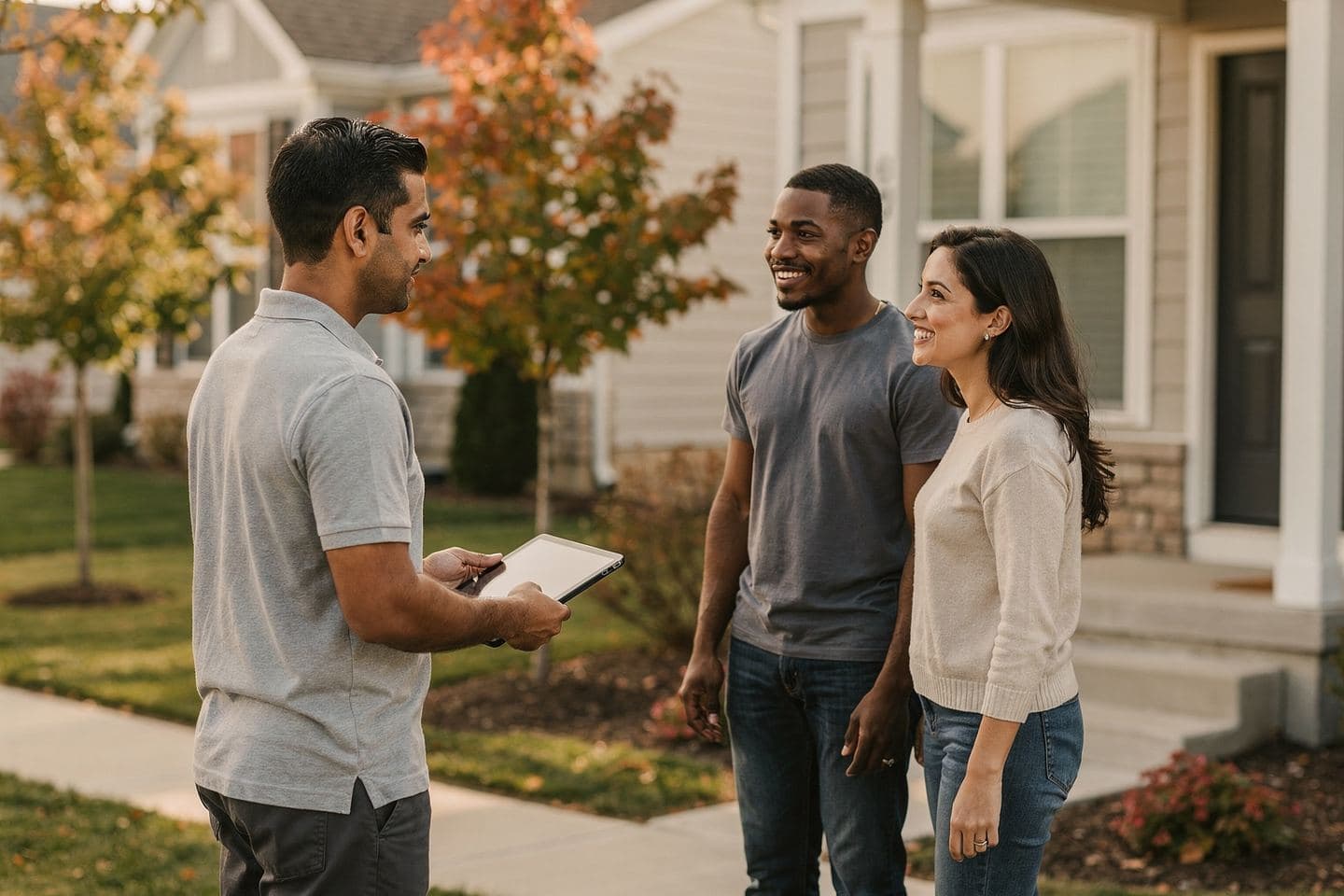
Why Telecom D2D Teams Need AI-Powered Sales Training
Telecom D2D sales training powered by AI records every door pitch, scores rep performance on product knowledge and objection handling, and auto-generates fiber-specific coaching from real field data.
The fiber broadband market is in the middle of its biggest expansion cycle ever. The U.S. added a record 11.8 million new fiber passings in 2025, bringing the national total to 98.3 million, according to the Fiber Broadband Association. Fiber now reaches over 60% of U.S. households, and major carriers like AT&T (targeting 30 million homes passed) and Verizon (adding 400,000 new locations per year) are racing to expand coverage. That buildout creates enormous demand for door-to-door sales teams to convert newly passed homes into paying subscribers.
But hiring reps is the easy part. Telecom D2D sales training has not kept pace with the infrastructure boom. Most fiber and broadband companies still rely on a week of classroom onboarding, a binder of product specs, and a manager who can shadow one rep per day. Meanwhile, reps are expected to knock 50 to 70 doors daily, explain technical differences between fiber, cable, and fixed wireless, handle contract objections, and close on the spot. The gap between what reps need to know and what they actually get trained on is where deals die.
Why Traditional Coaching Fails in Telecommunications Sales
Telecom D2D sales training breaks down in ways that are distinct from other field sales verticals like solar or pest control.
The product knowledge problem is constant
Unlike a roofing pitch where the product is relatively stable year to year, telecom reps face a moving target. Carriers roll out new speed tiers, bundle configurations, promotional pricing windows, and equipment options on a quarterly or monthly basis. A rep who memorized the lineup in January may be pitching outdated plans by March. According to Training Orchestra's telecom analysis, the perpetual cycle of new technology and product offerings creates a training burden that traditional classroom methods cannot sustain. Static scripts go stale within weeks.
Geographically dispersed teams limit coaching reach
Telecom D2D teams often cover large territories, sometimes spanning multiple cities or even states. A field manager running a 20-rep team spread across three markets cannot ride along with every rep. Self-directed eLearning modules fill the gap in theory, but research from Maplewave shows that self-directed eLearning does not deliver the same results as collaborative, feedback-driven training. Reps complete modules to check a box, not because the training actually changes how they sell at the door. The real cost of manual ride-alongs multiplies when teams are scattered across wide territories.
The differentiation challenge at the door
Over 70% of consumers express concerns about data use and provider trust, according to SPOTIO's telecom sales research. When a rep knocks on a door offering fiber internet, the homeowner's first thought is often, "I already have internet." The rep has roughly 15 seconds to differentiate fiber from cable, explain why switching matters, and build enough trust that the homeowner does not close the door. This requires a nuanced pitch that generic sales training does not cover: speed vs. bandwidth, symmetric upload speeds for remote workers, latency differences for gaming households, and reliability during peak hours. Every household has different usage patterns, and the best reps tailor their pitch accordingly.
How AI Coaching Solves Telecom-Specific Training Challenges
AI coaching platforms address the three failure points of traditional telecom D2D sales training: product knowledge decay, manager bandwidth limits, and the need for personalized pitch development.
Every door conversation becomes training data
When a telecom rep finishes a pitch, the AI transcribes the conversation with speaker separation, identifies which product features the rep covered (or missed), scores how they handled objections, and flags where the homeowner disengaged. Over time, the system builds a performance profile for each rep. One rep might open strong but fumble when asked about contract terms. Another might handle the "I already have internet" objection well but consistently forget to mention symmetric upload speeds. Platforms like Roonly auto-generate targeted drills from each rep's actual weak spots, so training adapts as the rep improves.
Product knowledge stays current through AI roleplay
Instead of waiting for a classroom session every time plans change, reps practice new offerings through AI roleplay scenarios that update as soon as the product lineup shifts. A simulated homeowner asks, "What is the difference between your 500 Mbps and 1 Gig plan? Is the upgrade worth $20 more?" and the rep has to answer naturally, not recite a spec sheet. With sub-2-second response times, the conversation flows at real doorstep speed. Reps can run five practice conversations during their drive to the territory, covering new bundles, promotional offers, and competitive comparisons.
Scaling coaching across dispersed territories
AI coaching eliminates the geography problem entirely. Whether a rep is knocking doors in Phoenix or Pittsburgh, every conversation gets analyzed with the same rigor. Managers check a dashboard to see scores across all territories in real time. Instead of picking one rep to shadow today, the manager reviews AI-flagged conversations that need human attention: a rep who consistently underperforms on close attempts, or a market where a specific objection is spiking. Organizations using AI sales coaching report 35 to 40% higher close rates and the ability to support 10x more reps per manager.
ROI Metrics for Telecom D2D Sales Teams
Fiber and broadband companies evaluating AI coaching should benchmark against these numbers.
| Metric | Industry Average | With AI Coaching | Impact |
|---|---|---|---|
| D2D conversion rate | 2-5% of doors knocked | 4-8% | Up to 2x improvement on raw contacts |
| Neighborhood take rate (post-install) | 20-30% | 30-45% | 10-15 percentage point lift |
| New rep ramp time | 4-8 weeks | 2-4 weeks | 50% faster to full productivity |
| Annual rep turnover | 35%+ | 22-28% | 30% reduction through structured development |
| Monthly subscriber value | $60-$120 ARPU | $70-$130 ARPU (better upselling) | 15-20% increase from bundle attachment |
Sources: SPOTIO telecom sales data; Fiber Broadband Association; Roonly industry benchmarks
For a 15-rep fiber sales team averaging 50 doors per day at a 3% close rate, improving to 5% on the same volume adds roughly 150 additional subscribers per month across the team. At an average ARPU of $80 per month, that is $12,000 in additional monthly recurring revenue, or $144,000 per year.
Common Telecom D2D Objections and How AI Coaching Addresses Them
Fiber and broadband reps hear the same handful of objections on nearly every block. The difference between a 3% closer and a 6% closer comes down to how naturally they handle these responses.
"I already have internet that works fine"
This is the most frequent objection in telecom D2D. The homeowner sees no reason to switch because their current service "works." AI coaching trains reps to ask diagnostic questions instead of arguing: "What do you use the internet for mostly? Any issues with buffering during evening hours, or slow uploads when you are on video calls?" The goal is to uncover a pain point the homeowner has normalized. Reps practice this discovery approach against AI personas who give realistic answers: "I guess my kids complain about lag when they are gaming," or "Video calls freeze sometimes but I figured that is normal." Once the rep identifies a specific pain point, they tie it to fiber's technical advantage. AI roleplay drills this sequence hundreds of times until the transition from question to pitch feels conversational.
"I am locked into a contract with my current provider"
Many homeowners believe they are locked in even when their contract has expired. AI coaching teaches reps to address this in two steps: first, help the homeowner check their contract status ("Most contracts are only 12 or 24 months. When did you sign up? If it has been more than two years, you are likely month-to-month already."), and second, present the math on early termination fees versus savings. A homeowner paying $90 per month for 200 Mbps cable who could switch to 1 Gig fiber at $70 saves $240 per year, often more than covering a $100 to $200 ETF. Reps who practice this calculation in roleplay deliver it smoothly at the door rather than fumbling with numbers.
"I do not trust door-to-door salespeople"
Trust is the universal D2D objection, and it hits especially hard in telecom where homeowners have been burned by misleading promotions. AI coaching identifies reps who skip trust-building steps (company badge, local office address, installation timeline, no-commitment offer) and auto-assigns drills until they consistently lead with credibility. The system scores how early in the conversation the rep establishes legitimacy and whether they name the carrier they represent within the first 30 seconds.
"The installation sounds like a hassle"
Homeowners picture torn-up yards, full-day appointments, and technicians who show up late. AI training drills reps on setting accurate expectations: typical fiber installations take 2 to 4 hours, most providers offer specific appointment windows, and modern installations often use existing conduit. Reps practice preempting this objection by weaving installation simplicity into their pitch before the homeowner raises it.
"I will just look it up online and sign up myself"
This objection threatens the rep's commission but also risks losing the sale entirely, since most homeowners who say this never follow through. AI coaching trains reps to add immediate value: "You can absolutely do that. But signing up through me today gets you the promotional rate that is not available online, and I can schedule your install for this week instead of the 2 to 3 week wait on the website." Reps practice delivering this with confidence, not desperation.
A Day in the Life: AI-Coached Telecom D2D Rep
Here is what telecom D2D sales training looks like when AI handles the coaching loop.
7:15 AM - Before heading to a newly lit fiber neighborhood, the rep opens a 5-minute lesson on their phone. The AI detected that their last four pitches all missed mentioning symmetric upload speeds, a key differentiator for remote workers. The lesson uses a dialogue snippet from the team's top closer, showing how she naturally works upload speed into the conversation: "Most cable gives you fast downloads but chokes on uploads. With fiber, both directions run at full speed, which is why your Zoom calls will not freeze anymore."
8:30 AM - The rep arrives in a subdivision where the fiber was just installed last month. Door hangers are on every house. They start knocking with their Apple Watch recording. No phone in hand, just a normal, professional conversation. The target is 50 to 60 doors before lunch.
10:15 AM - After 25 doors (eight not home, four hard nos, nine conversations, four sign-ups), the rep checks their scores between blocks. The AI flagged that they rushed through the contract comparison on two conversations where the homeowner mentioned being "locked in" with their current provider. A quick 3-minute roleplay pops up: practice the ETF calculation walkthrough. The rep runs through it twice standing next to their car.
12:00 PM - The manager checks the team dashboard from the regional office. Eighteen reps are knocking across four neighborhoods in two cities. Instead of zero coaching touchpoints (because the manager cannot be in four places at once), the dashboard shows real-time scores for every conversation. Five reps in the northeast territory are struggling with a new bundle configuration that launched last week. The AI already assigned product knowledge drills, but the manager records a quick 2-minute video tip and pushes it to those five reps.
3:30 PM - The rep wraps up the afternoon shift with 55 doors knocked, 7 sign-ups, and a conversion rate of 12.7% on contacts (conversations, not total doors). They check the leaderboard and see they are second on the team this week. A "Try Again" notification lets them re-attempt the exact scenario from a conversation where the homeowner shut them down during the bundle explanation. They run the roleplay, nail the pitch, earn points toward this month's contest.
Weekly - The manager runs a 15-minute team call using AI insights: which objections are trending in each neighborhood, which reps improved the most, and which talk tracks from top closers should be shared. One insight stands out: reps who mention the homeowner's specific current provider by name (instead of saying "your current internet") close at a 23% higher rate. The AI starts weighting this behavior in its scoring model.
What to Look for in a Telecom D2D Sales Training Tool
Not every coaching platform handles the pace and complexity of telecom door-to-door sales. Here is what matters for this vertical.
| Feature | Why It Matters for Telecom D2D |
|---|---|
| Rapid product update capability | Plans, bundles, and promotions change monthly; training must keep pace |
| Competitive comparison training | Reps need to differentiate fiber from cable, DSL, and fixed wireless on the spot |
| Apple Watch or hands-free recording | Reps knocking 50-70 doors per day cannot hold a phone during every conversation |
| Offline recording | Suburban and rural fiber territories often have spotty cell signal |
| Sub-3-second roleplay response | Real doorstep conversations move fast; 5-7 second delays break the practice flow |
| Territory-level analytics | Managers need to compare performance across dispersed, multi-market teams |
| Automated training from real data | Generic sales scripts do not cover carrier-specific plans, local competitive dynamics, or neighborhood-level objection patterns |
For teams that need the full loop of recording, analysis, and automated training from real field data, look for platforms built specifically for door-to-door rather than adapted from call-center tools. AI coaching built for field sales verticals closes the gap between what happens at the door and what happens in training.
Frequently Asked Questions
What is telecom D2D sales training with AI?
Telecom D2D sales training with AI uses software that records door-to-door fiber and broadband sales conversations, transcribes them with speaker separation, scores rep performance across key stages (opener, product pitch, objection handling, close), and auto-generates personalized coaching. Unlike traditional ride-alongs that cover one rep per day, AI coaching analyzes every conversation and delivers targeted drills automatically.
How much does AI coaching cost for telecom D2D teams?
AI coaching platforms for door-to-door telecom teams run up to about $330 per rep per month. Roonly's pricing is custom: it depends on how much AI roleplay your team needs, the term and team size, with no commission, ever. See pricing for a quote on your real team.
How quickly can new telecom reps ramp up with AI coaching?
Traditional onboarding for telecom D2D reps takes 4 to 8 weeks before they can confidently pitch the full product lineup, handle common objections, and navigate competitive comparisons. AI coaching platforms can cut this to 2 to 4 weeks by providing daily personalized drills on product knowledge, objection handling, and competitive positioning trained on the team's actual conversation data.
Does AI coaching work for both residential and business telecom sales?
Yes, but the training scenarios differ significantly. Residential fiber sales are typically same-day closes at the door, while business telecom deals involve multiple stakeholders and longer sales cycles. AI coaching platforms can generate separate persona sets and scoring criteria for each market segment. Most D2D telecom teams focus on residential, where the conversation patterns are more consistent and the volume is higher.
What conversion rate should telecom D2D reps target?
The average D2D conversion rate on raw door contacts is 2 to 5%, according to KnockBase research. High-performing telecom teams with structured coaching hit 5 to 8% on contacts where a conversation actually happens. In newly lit fiber neighborhoods where the product is genuinely new to the area, conversion rates can be significantly higher because the differentiation story is clearest.
Can AI coaching help with the fiber market's increasing competition?
With 13.8 million U.S. homes now serviceable by two or more fiber providers, competitive selling skills are becoming as important as product knowledge. AI coaching identifies how reps handle competitive mentions, whether they lead with technical differentiation or price, and how they respond when a homeowner says they already have fiber from another carrier. This data feeds targeted training that keeps reps sharp as markets get more crowded.
Is door-to-door still effective for selling fiber internet?
Yes. Trained D2D teams can produce 20 to 30% take rate increases in neighborhoods where fiber goes live, according to Miller Bro Sales. While D2D accounts for a smaller percentage of total telecom sales volume compared to inbound channels, the face-to-face interaction is especially valuable for fiber because reps can explain the technical benefits in person and sign customers up on the spot before they default to keeping their current provider out of inertia.
Related guides



Published March 20, 2026. Last updated October 6, 2026.
See what Roonly finds in your team's conversations.
Roonly coaches every in-person sales conversation and trains each rep on exactly where they lose the sale.
Book a demo