Fencing Sales Training: AI Coaching for D2D Teams
Fencing sales training powered by AI records real door conversations, scores every pitch automatically, and builds personalized coaching that scales without adding managers.
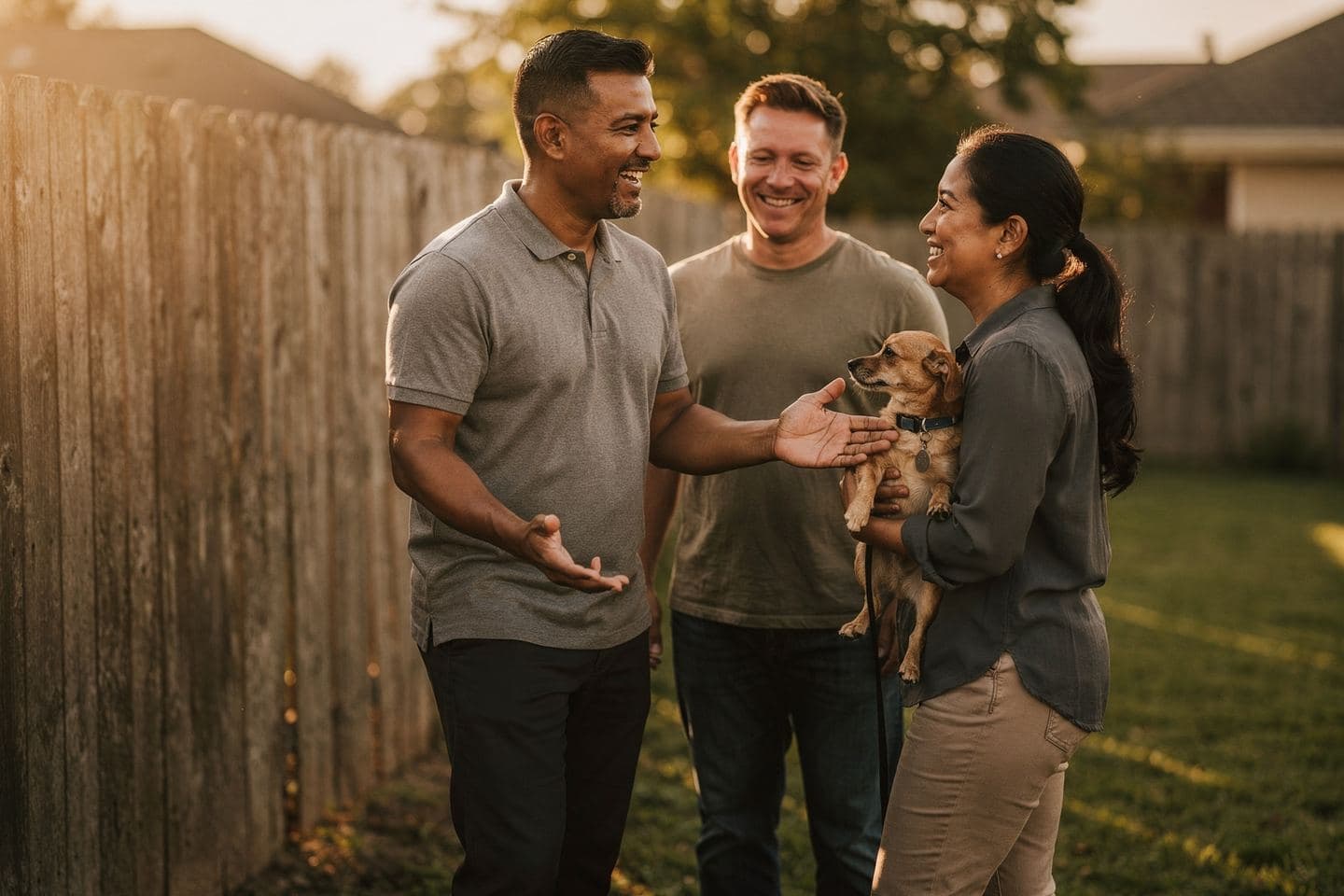
What Fencing Sales Training D2D Looks Like in 2026
Fencing sales training powered by AI records real door conversations, scores every pitch automatically, and builds personalized coaching that scales without adding managers.
The U.S. fencing market reached $9.8 billion in 2025 and is growing at a 5.7% annual rate, according to Grand View Research's U.S. fencing market analysis. Residential projects account for 63.7% of total revenue, making neighborhoods the primary battleground for fence companies looking to grow. Door-to-door canvassing remains one of the highest-converting lead sources in fencing because reps can identify aging, damaged, or missing fences just by walking the block. But the training behind those D2D teams has not kept pace with the opportunity.
Most fence companies train reps the same way they did a decade ago: a few days of product knowledge, a printed script, and a handful of ride-alongs before sending them out to knock. The gap between that approach and what actually closes high-ticket fence jobs is where most companies lose money.
Why Traditional Coaching Fails in Fencing
Fencing D2D operates differently from nearly every other home services vertical. The combination of high average ticket prices, complex product configurations, and local regulatory hurdles makes generic sales training insufficient.
High tickets mean longer conversations and fewer swings
The average residential fence installation costs $3,200 to $7,500, according to HomeGuide's 2026 fencing cost data. That is 15 to 30 times the initial ticket on a pest control account and 3 to 5 times a typical gutter job. Homeowners do not impulse-buy a $5,000 fence at the door. The D2D conversation in fencing is longer, more consultative, and more likely to involve a second decision-maker. Reps need to qualify budget, understand property lines, navigate material preferences (wood versus vinyl versus aluminum versus chain link), and handle concerns about HOA compliance and permits. A rep who stumbles through any of those steps loses a potential $5,000 sale, not a $200 one.
Managers cannot ride along enough to coach high-value skills
A fence company running 10 canvassers needs each rep to set 3 to 5 qualified appointments per day to keep the installation crews busy. But the consultative skills required to set those appointments take months to develop through traditional coaching. A manager can ride along with one rep per day at most. That leaves nine reps refining their pitch through trial and error on real homeowners. The real cost of manual ride-alongs is amplified in fencing because every lost conversation represents thousands in potential revenue, not hundreds.
Product complexity overwhelms new reps
Fence reps need to speak confidently about wood privacy fencing at $15 to $25 per linear foot, vinyl at $15 to $40 per foot, chain link at $5 to $20 per foot, and aluminum or ornamental options above $30 per foot, according to Angi's fence installation cost data. They also need to explain height restrictions, gate configurations, slope adjustments, and warranty differences. Generic D2D training covers none of this. Programs like D2D Experts teach valuable door skills, but fencing reps need product-specific coaching layered on top of those fundamentals.
How AI Coaching Solves Fencing-Specific Challenges
AI-powered coaching addresses the gaps that traditional training cannot fill in fencing D2D. Instead of waiting for a manager to observe a conversation, every door interaction gets analyzed automatically.
Every canvassing conversation gets scored
When a fence rep finishes a pitch, the AI transcribes the conversation, identifies which stage broke down (opener, property assessment, material recommendation, objection handling, appointment set), and surfaces the pattern over time. A rep might not realize they consistently rush past the material comparison, or that they lose homeowners every time the HOA topic comes up. Over dozens of conversations, these patterns become clear. AI coaching platforms like Roonly use this analysis to auto-generate drills targeting each rep's specific weak points.
Roleplay trained on real fence objections
Fencing objections are different from every other vertical. "I need to get more quotes" is the default response to any high-ticket proposal at the door. "My fence is fine" requires a different rebuttal than "I do not have a bug problem" in pest control. AI roleplay trained on actual fence sales conversations lets reps practice the specific pushback they hear daily. Roonly's roleplay responds in under 2 seconds with 500+ dynamic personas that hold firm, forcing reps to work through price resistance and comparison shopping without getting an easy close from a compliant simulation.
Faster ramp on a complex product
New fencing reps typically need 4 to 6 weeks before they can confidently walk a homeowner through material options, pricing tiers, and the installation process. AI coaching compresses this by running reps through the most common fencing scenarios in roleplay before they knock a real door. Companies using AI coaching tools report up to 70% faster onboarding times, which means new reps start setting qualified appointments in their second week instead of their fifth.
ROI Metrics for Fencing Sales Teams
Fencing operates on high-ticket, one-time sales (with referral and repeat potential). Small improvements in close rate and average ticket size produce outsized revenue gains.
| Metric | Industry Average | With AI Coaching | Impact |
|---|---|---|---|
| D2D appointment set rate | 2-4% of knocks | 4-6% of knocks | 50-80% improvement |
| New rep ramp time | 4-6 weeks | 1-2 weeks | 60-70% faster to productive |
| Average ticket size | $4,500 | $5,200-$5,600 | 15-25% increase through better upselling |
| Annual rep turnover | 40-55% | 25-35% | 30% reduction from structured development |
| Appointments per rep per day | 2-3 | 3-5 | 50-70% increase from better conversations |
Sources: Roonly industry benchmarks; HomeGuide fencing cost data; Grand View Research fencing market report
For a 10-rep fencing team where each rep sets 3 appointments per day at a 40% close rate and an average ticket of $4,500, moving the appointment rate from 3 to 4 per rep per day adds 10 more closed jobs per week across the team. That is $45,000 in additional weekly revenue.
Common Fencing Objections and How AI Coaching Addresses Them
Fencing D2D reps face objections shaped by the high price point and the homeowner's perception that a fence is a long-term, high-stakes decision. Here are the most common and how AI coaching trains reps to handle them.
"I need to get a few more quotes first"
This is the most frequent objection in fencing D2D because homeowners treat a fence like a major renovation. AI coaching trains reps to reframe the quote-gathering process as something they can support rather than compete against: "That makes sense. Most homeowners get two or three quotes. What I can do right now is walk the property with you so you have an accurate scope to compare against. That way you are comparing the same job, not different measurements." Reps who practice this approach in AI roleplay learn to position the on-site visit as helpful rather than pushy, which converts 30-40% of "let me get more quotes" responses into same-day appointments.
"My current fence is still holding up"
Fencing reps canvass specifically because they can see the fence from the street. When a homeowner says the fence is fine, the rep needs to respectfully point out what they observed without being confrontational. AI coaching drills reps on opening with an observation rather than a pitch: "I noticed the posts on your south side are starting to lean. That usually means the base is rotting below grade." The AI scores whether the rep stated the observation factually without exaggerating, which builds trust instead of triggering defensiveness.
"I have to check with my HOA before doing anything"
HOA restrictions are a real concern in many suburban neighborhoods, and dismissing them loses credibility. AI coaching trains reps to carry knowledge about common HOA fence regulations (height limits, material requirements, color restrictions, setback rules) and to position themselves as the expert who handles HOA approval as part of the process. Reps practice saying, "We work with HOAs in this neighborhood regularly. We know the approved materials and height limits, and we handle the approval submission for you." The AI evaluates whether the rep demonstrated HOA familiarity or defaulted to a generic response.
"That is way more than I expected"
Price shock is common in fencing because homeowners often underestimate the cost of materials and labor. AI coaching trains reps to anchor expectations early in the conversation by referencing the per-foot range before giving a total: "Most homeowners in this area pay between $20 and $35 per foot installed, depending on material. For a typical backyard, that works out to $4,000 to $6,000." Reps who practice price anchoring in roleplay see 15-20% fewer price objections at the close because the homeowner was calibrated from the start.
"I will just do it myself"
DIY fencing appeals to cost-conscious homeowners, but most underestimate the complexity. AI coaching trains reps to acknowledge the DIY option and then ask diagnostic questions: "Have you fenced before? The biggest issue homeowners run into is hitting utility lines or setting posts at the wrong depth, which can mean pulling everything out and starting over." The goal is not to scare the homeowner but to surface the hidden costs of DIY (tool rental, permit pulling, disposal, and the risk of doing it twice) against a professional install with a warranty.
A Day in the Life: AI-Coached Fencing Rep
Here is what fencing sales training looks like when AI handles the coaching.
7:15 AM - Before the morning meeting, the rep opens a 5-minute lesson on "anchoring price expectations for vinyl versus wood." It is their weakest area based on the past three days of door data. The lesson pulls real dialogue from the team's top appointment-setter who handles the same objection in the same territory.
8:00 AM - The team huddle is 15 minutes. The manager shares one AI-generated insight: reps working the new subdivision on the east side are hearing "I have to check with my HOA" on 60% of doors. The AI already pushed a targeted drill to every rep working that zone, loaded with the HOA specs for that specific development.
8:30 AM - The rep starts canvassing with their Apple Watch recording. No phone in hand, no awkward recording setup. They walk the block scanning for leaning posts, rusted chain link, and faded wood panels. Each door conversation is captured automatically.
10:00 AM - Between streets, the rep checks their scores from the morning pitches. The AI flagged that they jumped straight to price on two conversations without walking the property first. A 2-minute roleplay drill practices the transition: "Let me take a quick look at your fence line so I can give you an accurate number." The rep runs through it in the truck before the next block.
12:00 PM - The manager checks the dashboard over lunch. Ten canvassers are in the field. Instead of reviewing zero conversations, the manager sees appointment-set rates for every rep. Two new hires are struggling with the property walkthrough transition. The AI assigned them extra drills. One veteran rep's average ticket dropped this week because they stopped mentioning the vinyl upgrade option. The AI flagged it and assigned a comparison-selling drill.
5:00 PM - The rep checks the leaderboard. They set 4 appointments today, one above their average. A "Try Again" notification shows the conversation where they lost a homeowner on the "I will just do it myself" objection. They run the roleplay version, practice a cleaner response, and earn points toward the weekly contest.
Weekly - The manager runs a short team review using AI-generated data: which objections are trending, which neighborhoods have the highest appointment-set rates, and which material recommendations the top closers are using. What top-performing D2D reps do differently becomes visible in the data instead of locked inside one person's experience.
What to Look for in a Coaching Tool for Fencing
Not every sales coaching platform is built for fencing D2D. The vertical has requirements that generic tools do not address.
| Feature | Why It Matters for Fencing |
|---|---|
| High-ticket objection training | Reps must handle price resistance on $3,000 to $8,000 proposals at the door |
| Material comparison coaching | Reps need to explain wood vs. vinyl vs. chain link vs. aluminum confidently |
| HOA and permit knowledge integration | Conversations in regulated neighborhoods require specific compliance knowledge |
| Apple Watch or hands-free recording | D2D reps need both hands free when walking property lines with homeowners |
| Offline recording capability | Suburban and rural territories often have poor cell coverage |
| Appointment-setting focus | Fencing D2D sets appointments for estimators rather than closing at the door |
| Sub-3-second roleplay response | Reps must practice at real conversation speed, not wait 5 to 7 seconds between turns |
The American Fence Association offers industry education through FENCETECH, and programs like D2D Experts teach foundational door skills. But for daily coaching that scales across a growing canvassing team without requiring more managers, AI coaching tools designed for door-to-door fill the gap that event-based and one-time training programs leave open.
Frequently Asked Questions
What is the best sales training for fencing D2D teams?
For foundational canvassing skills, programs like D2D Experts and D2DCon offer strong general content. For ongoing, daily coaching that adapts to each rep's performance and scales without adding managers, AI-powered platforms that record real conversations and generate personalized drills deliver the most consistent results.
How long does it take to train a new fence canvasser?
Traditional onboarding takes 4 to 6 weeks before a new rep can confidently discuss materials, pricing, and the installation process. AI coaching compresses this to 1 to 2 weeks by running reps through common fencing scenarios in roleplay before they knock their first door, then providing immediate feedback once they start canvassing.
What is a good appointment-set rate for fencing D2D?
The typical D2D contact rate is 30% of doors knocked, and the industry-average appointment-set rate among contacted homeowners ranges from 5% to 10%. High-performing reps with structured coaching consistently set appointments on 12% to 18% of contacts, effectively doubling their daily output on the same territory.
How do I train reps to handle price objections on high-ticket fencing jobs?
Price resistance is the default objection in fencing because average tickets range from $3,200 to $7,500. Train reps to anchor expectations early by referencing per-foot pricing before giving a total, and to frame the cost against the alternative (DIY risks, property value impact, warranty coverage). AI roleplay lets reps practice price conversations repeatedly until the delivery feels natural.
What are the most common objections in fencing D2D sales?
The five most frequent objections are: "I need to get more quotes," "My fence is still holding up," "I have to check with my HOA," "That is way more than I expected," and "I will just do it myself." Each requires fencing-specific responses rather than generic objection-handling techniques.
How much does AI sales coaching cost for fence companies?
AI coaching platforms for D2D sales run up to about $330 per rep per month. Roonly's pricing is custom: it depends on how much AI roleplay your team needs, the term and team size, with no commission, ever. See pricing for a quote on your real team.
Can AI coaching help with fencing product knowledge, not just sales skills?
Yes. AI coaching trained on real fencing conversations picks up on product knowledge gaps automatically. If a rep consistently stumbles when homeowners ask about vinyl versus wood durability, or when they cannot explain the warranty difference between materials, the AI flags it and generates targeted drills. This is where industry-specific AI coaching outperforms generic sales training programs.
Related guides

Published March 24, 2026. Last updated October 6, 2026.
See what Roonly finds in your team's conversations.
Roonly coaches every in-person sales conversation and trains each rep on exactly where they lose the sale.
Book a demo