What Is Talk-to-Listen Ratio in Sales?
Talk-to-listen ratio measures rep talking time versus listening time. Top performers maintain a 43:57 ratio, talking less and listening more to close deals.
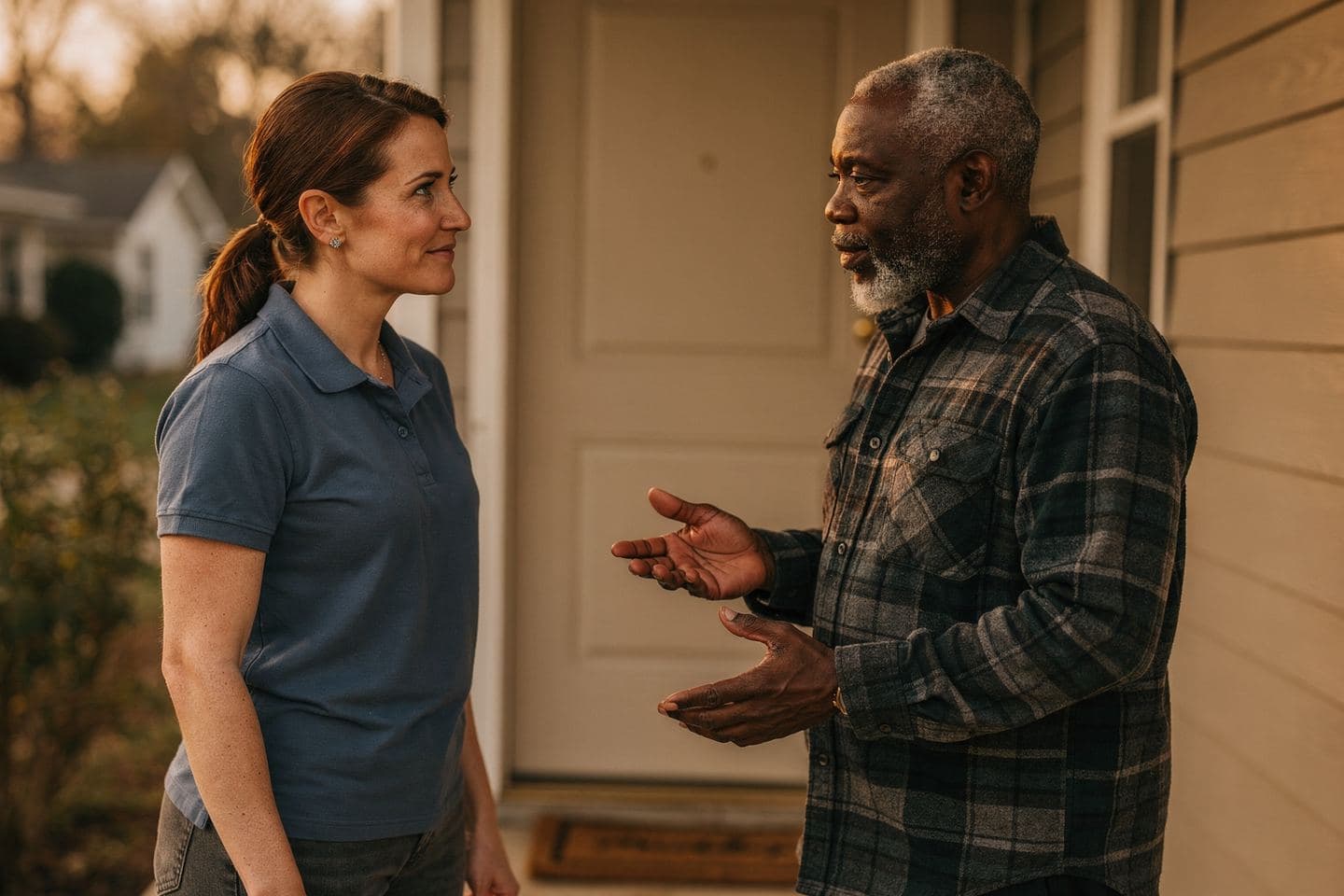
What Is Talk-to-Listen Ratio?
Talk-to-listen ratio measures rep talking time versus listening time. Top performers maintain a 43:57 ratio, talking less and listening more to close deals.
In concrete terms, talk-to-listen ratio is the percentage of a sales conversation spent speaking versus the percentage spent listening. A rep with a 60:40 ratio talks for 60% of the conversation and listens for 40%. This metric is one of the most reliable predictors of deal outcomes in sales, and it is especially relevant for door-to-door teams where every doorstep pitch is a live, unscripted conversation with no second chances.
The concept gained mainstream traction after Gong.io analyzed over 326,000 B2B sales calls and found a clear correlation between listening more and closing more deals. The data showed that top performers who exceeded quota by 120% maintained a 43:57 talk-to-listen ratio, meaning they spent more time listening than talking. The average across all reps, by contrast, was 60:40 in favor of talking, a near-inverse of the winning pattern.
For talk-to-listen ratio sales coaching to work, you need two things: accurate measurement and a system for turning that data into behavior change. This is where most teams fall short. They know the ratio matters, but they lack the tools to track it across every conversation and the process to coach reps toward improvement.
Why Talk-to-Listen Ratio Matters for D2D Sales Teams
Door-to-door sales creates a unique pressure to talk. Reps have seconds to capture attention at the door, and the instinct is to fill every pause with more pitch. But the data is clear: reps who dominate conversations lose more deals than they win.
According to Salesloft research, reps who talk for more than 65% of a call see measurably lower conversion and win rates. The inverse is also true. When prospect talk-time increased from 22% to 33%, opportunity win rates improved significantly. In a D2D context, this means the rep who asks a good question and then actually listens to the full answer is more likely to close than the rep who rattles through a memorized script.
There are three reasons this metric hits harder in field sales than in phone or video sales:
-
No do-overs. A phone rep can call the prospect back. A D2D rep who loses the door does not get a second chance on that house. The stakes of each conversation are higher, which makes getting the ratio right more critical.
-
Reading the room is harder. On a video call, you can see facial expressions and body language clearly. At a doorstep, environmental distractions (kids, dogs, neighbors) compete for attention. Listening becomes the primary way to gauge whether the homeowner is engaged or ready to close the door.
-
Trust builds faster through listening. Homeowners who open their door to a stranger are already skeptical. A rep who listens to their concerns and responds specifically to what they said builds trust faster than one who steamrolls with a canned pitch. Research from Salesforce found that 69% of buyers want salespeople to listen to their needs, and 61% want salespeople who avoid being pushy.
How Talk-to-Listen Ratio Works in Practice
Measuring talk-to-listen ratio requires recording the conversation and using software to calculate the time each speaker spends talking. In traditional sales environments, this meant reviewing a small sample of calls manually. For D2D teams, it was nearly impossible until field-specific recording tools emerged.
The Measurement Process
A rep starts their shift and activates recording on their phone or wearable device. Each doorstep conversation is captured, uploaded, and transcribed with speaker separation (the AI identifies which words came from the rep and which from the prospect). The system then calculates the talk-to-listen ratio for each conversation automatically.
What the Numbers Look Like
According to ExecVision's analysis, the ideal ratio varies by conversation type:
| Conversation Type | Rep Talk Time | Prospect Talk Time |
|---|---|---|
| Discovery / Needs Assessment | 43% | 57% |
| Product Demo / Presentation | 60% | 40% |
| Negotiation / Close | 40% | 60% |
| Renewal / Follow-up | 50% | 50% |
For D2D sales, most doorstep conversations blend discovery and close into a single interaction. The best-performing reps in the field tend to hover around that 43:57 golden ratio during the needs assessment portion and shift toward 40:60 during the close, letting the homeowner talk themselves into the decision.
Where Reps Go Wrong
The most common mistake is the long monologue. Gong's data shows that lost deals feature significantly longer seller monologues than won deals. When a rep talks for more than 90 seconds without pausing, prospects disengage. In D2D, that disengagement looks like the homeowner glancing at their phone, stepping back from the door, or giving one-word answers.
A second common pattern is the "information dump." A rep hears a prospect mention a concern, and instead of asking a follow-up question, they launch into every feature and benefit they can think of. The ratio balloons to 70:30 or worse, and the prospect feels talked at rather than listened to.
Key Metrics and Benchmarks for Talk-to-Listen Ratio
The data around talk-to-listen ratio is unusually consistent across studies. Here are the benchmarks that matter for D2D sales leaders.
The golden ratio: 43:57. This is the most cited benchmark in sales, established by Gong's analysis of hundreds of thousands of conversations. Top performers talk for 43% of the conversation and listen for 57%. This number has held steady across multiple years of data.
The average rep: 60:40. Most sales teams fall well short of the ideal. The average talk-to-listen ratio remains 60:40, which means the typical rep talks nearly 50% more than they should. That 17-percentage-point gap between average and top-performer behavior represents real money in lost deals.
The danger zone: above 65%. Reps who talk for more than 65% of the conversation see a sharp drop in conversion rates. CloudTalk's research found that conversations where the rep dominates with extended monologues consistently underperform.
The training impact: 25% close rate lift. Organizations that build active listening into their coaching programs see a 25% increase in close rates and a 15% boost in customer retention, according to Peak Sales Recruiting. This makes talk-to-listen ratio one of the highest-ROI coaching metrics available to sales leaders.
| Benchmark | Ratio | Outcome |
|---|---|---|
| Top performers | 43:57 (talk:listen) | 120% of quota |
| Average performers | 60:40 (talk:listen) | At or below quota |
| Underperformers | 65:35+ (talk:listen) | Significantly below quota |
| Discovery calls (ideal) | 43:57 | Higher qualification rates |
| Closing conversations (ideal) | 40:60 | Higher win rates |
How AI Coaching Tools Track and Improve This Metric
Talk-to-listen ratio is one of the core metrics that AI coaching platforms measure automatically. Before conversation intelligence tools existed, the only way to assess a rep's listening habits was to ride along and take notes. Now, every conversation can be analyzed.
The basic approach works like this: the AI transcribes the conversation with speaker diarization (separating the rep's voice from the prospect's), calculates the time split, and flags conversations where the ratio falls outside the target range. A manager can then see which reps consistently talk too much and which maintain the ideal balance.
More advanced platforms go beyond measurement. They connect the ratio data to specific coaching actions. For example, Roonly analyzes each conversation at the stage level (opener, value prop, objection handling, close), so a manager can see that a rep's ratio is 55:45 during the opener but balloons to 75:25 during objection handling. That specificity turns a general metric into a targeted training plan.
The coaching loop matters here. Tracking the ratio is step one. The question is what happens next. Some platforms surface the data on a dashboard and leave coaching to the manager. Others, like platforms that close the coaching loop automatically, generate AI roleplay scenarios that force the rep to practice listening. The AI prospect in these scenarios will not move forward until the rep asks the right questions and pauses to listen, building the muscle memory that transfers to real doorstep conversations.
For D2D teams that want to improve their talk-to-listen ratio at scale, the combination of automatic measurement and AI-generated training is the most practical path. It removes the bottleneck of manager availability and gives every rep on the team consistent, data-driven feedback on their listening habits.
Common Misconceptions About Talk-to-Listen Ratio
"The 80/20 rule (listen 80%, talk 20%) is the gold standard." This is one of the most repeated claims in sales training, and it is not supported by data. After analyzing over 2,000 conversations, researchers found the largest measured outlier was 35:65. An 80:20 split does not happen in real sales conversations, and aiming for it sets an unrealistic target that confuses reps.
"A lower ratio is always better." Not necessarily. A rep who barely talks at all is not coaching the prospect toward a decision. The ideal is a balanced conversation where the rep guides with questions and listens to answers, not a one-sided monologue from either party. In a D2D context, the rep still needs to deliver a value proposition and handle objections. The goal is balance, not silence.
"You can fix your ratio by just asking more questions." Asking questions helps, but the quality of questions matters more than the quantity. Rapid-fire questions feel like an interrogation, not a conversation. The best reps ask fewer, better questions, then give the prospect room to answer fully before responding. Pausing for two to three seconds after a prospect finishes speaking is one of the simplest and most effective techniques.
"Talk-to-listen ratio only matters for phone sales." The metric originated in phone and video sales research, but the principle applies to any sales conversation. D2D reps who track and improve their ratio see the same benefits as inside sales teams: more engaged prospects, better objection handling, and higher close rates.
"Experienced reps do not need to track this." Tenure does not guarantee good habits. Experienced reps can develop patterns (talking over prospects, defaulting to long pitches) that erode their ratio over time without them realizing it. Regular measurement keeps even veteran reps honest about their listening habits.
Frequently Asked Questions
What is the ideal talk-to-listen ratio for sales?
The most widely cited benchmark is 43:57, meaning the rep talks for 43% of the conversation and listens for 57%. This ratio comes from Gong's analysis of over 326,000 sales conversations and correlates with top performers who exceeded quota by 120%.
How do you calculate talk-to-listen ratio?
Talk-to-listen ratio is calculated by dividing the total time the rep spends speaking by the total conversation time, then comparing it to the time spent listening (or the time the prospect speaks). AI-powered conversation intelligence tools calculate this automatically using speaker diarization technology.
Does talk-to-listen ratio matter for door-to-door sales?
Yes. While most research originates from phone and video sales, the underlying principle, that listening more leads to higher close rates, applies to any sales conversation. D2D reps who maintain a balanced ratio build trust faster at the door and close more consistently.
How can a sales rep improve their talk-to-listen ratio?
Three practical techniques: first, ask open-ended questions that require more than a yes or no answer. Second, pause for two to three seconds after the prospect finishes speaking before responding. Third, review recorded conversations to identify moments where you talked over the prospect or launched into unnecessary monologues.
What tools measure talk-to-listen ratio automatically?
Conversation intelligence platforms like Gong (for inside sales), Rilla (for field sales), and Roonly (for D2D sales with automated coaching) all measure talk-to-listen ratio automatically. These tools use AI to transcribe conversations, separate speakers, and calculate the time split without any manual effort.
Can talking too little hurt your sales numbers?
Yes. A rep who barely speaks fails to guide the conversation, deliver value, or advance toward a close. The goal is not to minimize talking but to optimize the balance. Prospects need information and direction from the rep. The research shows that the ideal is a balanced conversation, not a passive one.
How quickly can improving talk-to-listen ratio impact close rates?
Teams that focus on listening skills in their coaching programs report measurable results within 30 to 60 days. The behavior change is straightforward (ask more, talk less, pause longer), and the impact on deal outcomes shows up quickly once reps internalize the habit.
Related guides



Last updated March 19, 2026.
See what Roonly finds in your team's conversations.
Roonly coaches every in-person sales conversation and trains each rep on exactly where they lose the sale.
Book a demo