What Is Sales Gamification Training?
Sales gamification training uses game mechanics like points, leaderboards, and contests to motivate reps, with gamified teams reporting 40% higher deal closure rates.
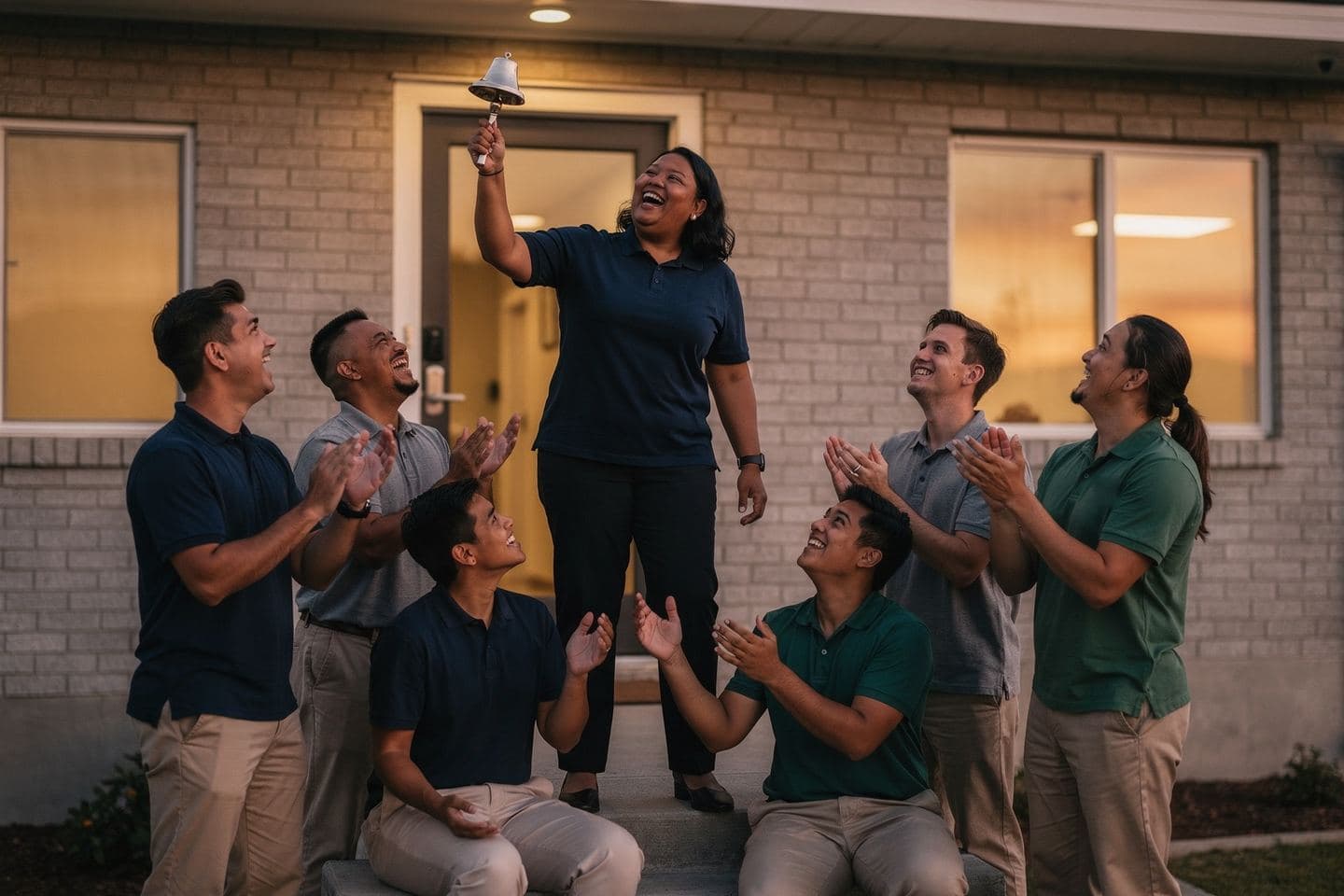
What Is Sales Gamification Training?
Sales gamification training uses game mechanics like points, leaderboards, and contests to motivate reps, with gamified teams reporting 40% higher deal closure rates.
In plain terms, sales gamification training takes the same psychological triggers that make video games addictive (progress tracking, competition, achievement, instant feedback) and applies them to the sales process. Instead of relying solely on commission checks that arrive weeks after the work, gamification creates immediate, visible feedback loops that keep reps engaged throughout the day.
For door-to-door sales teams, this is particularly relevant. D2D reps spend their days knocking doors alone, often without real-time visibility into how they stack up against teammates. Gamification bridges that isolation gap. According to Spinify's analysis of sales gamification data, 83% of employees report feeling more motivated with gamified training compared to just 39% with traditional methods. That motivation gap is the difference between a rep who grinds through the afternoon heat and one who clocks out early.
The global gamification market reflects this trend. It reached $19.4 billion in 2025 and is projected to grow to $92.5 billion by 2030, according to Mordor Intelligence. Corporate training is one of the fastest-growing segments.
Why Sales Gamification Matters for D2D Teams
Door-to-door sales has a unique motivational challenge. Reps work independently, often across large territories, with limited daily contact with their managers or teammates. The feedback loop is slow: knock doors, maybe close a deal, wait for the commission to process. On a tough day with a string of rejections, the only motivation is internal grit.
Gamification compresses that feedback loop. When a rep logs a door knock and immediately sees their position on a team leaderboard update, the psychological reward is instant. Research from Taylor & Francis confirms this effect: a field experiment with 147 sales agents found that gamification in sales training increases training enjoyment and motivation, which directly enhances knowledge acquisition.
The practical benefits show up in three areas:
-
Daily engagement. Reps who see real-time progress against goals and peers stay active longer. Teams using gamification report a 60% boost in engagement compared to non-gamified teams, according to ScienceDirect research on gamification in training.
-
Healthy competition. D2D teams are naturally competitive. Leaderboards channel that instinct productively. Instead of reps competing in their heads (or not at all), the competition is visible, structured, and tied to the right activities, not just closed deals.
-
Skill retention. Gamified training improves skills retention by 40% compared to traditional methods. For D2D teams constantly onboarding new reps, this means faster ramp times and fewer early-tenure dropouts. The cost of losing a new rep in their first two weeks is steep, and gamification helps counter it.
How Sales Gamification Works in Practice
Sales gamification is not one feature. It is a system of interconnected mechanics that reinforce each other. Here is how it typically works for a field sales team.
Points and Scoring
Reps earn points for completing sales activities: doors knocked, presentations given, follow-ups scheduled, deals closed. The point values can be weighted to encourage specific behaviors. A team trying to improve its prospecting volume might assign higher point values to doors knocked, while a team focused on closing might weight completed deals more heavily.
Leaderboards
Real-time leaderboards display individual or team rankings across selected KPIs. According to SPOTIO's guide to sales leaderboards, effective leaderboards update instantly as reps log activity, whether it is doors knocked, demos booked, or deals closed. For D2D teams, mobile-friendly leaderboards that reps can check between doors are essential.
The best leaderboard implementations include multiple board types: daily sprints, weekly competitions, and monthly cumulative rankings. This prevents the same top performer from dominating every board and gives mid-tier reps achievable targets.
Badges and Achievements
Badges mark milestones: first sale, 100 doors in a day, five consecutive closes, perfect pitch score. Unlike points (which reset), badges accumulate over time and create a visible record of accomplishment. Over 70% of Global 2000 companies now incorporate some form of gamification in their operations, according to Gitnux's gamification market report.
Contests and Challenges
Time-limited competitions create bursts of focused activity. A "Power Hour" contest that awards the rep with the most doors knocked between 4-5 PM can revive a team's energy during the afternoon slump. Weekly contests tied to specific skills (most objections overcome, highest pitch score) reinforce training goals beyond raw volume.
Reward Systems
Points and achievements connect to tangible rewards: gift cards, days off, team dinners, or cash bonuses. The reward does not need to be expensive. Research consistently shows that public recognition and status often motivate as strongly as monetary incentives.
Key Metrics and Benchmarks for Sales Gamification
The ROI data for sales gamification is well-documented. Here are the benchmarks that matter for D2D sales leaders.
| Metric | Industry Benchmark | Source |
|---|---|---|
| Deal closure improvement | +40% | Spinify |
| Employee engagement increase | +60% | ScienceDirect |
| Skills retention improvement | +40% | Thirst |
| Motivation with gamified training | 83% (vs. 39% traditional) | Open Loyalty |
| Average ROI | 300% | Gitnux |
| Revenue increase (HP case study) | 30-42% | Spinify |
For D2D-specific benchmarks, companies implementing gamification alongside structured coaching programs report 20-40% increases in rep sales and 30% lower turnover. The turnover reduction alone can justify the investment. Replacing a single D2D rep, when you account for recruiting, training, and lost production, can cost over $100,000.
KPMG's documented results are worth noting: gamifying their training programs produced a 25% increase in fee collection and a 22% boost in new business opportunities.
How AI Coaching Tools Enhance Sales Gamification
Traditional gamification tracks activities: doors knocked, calls made, appointments set. These are useful proxies, but they do not measure quality. A rep who knocks 100 doors with a weak pitch is not outperforming a rep who knocks 60 doors and closes 10 deals.
AI coaching platforms add a quality layer to gamification. By analyzing the actual content of sales conversations, AI can score pitch quality, objection handling, closing technique, and other skills. Those scores feed into the gamification system, creating leaderboards and contests based on skill, not just volume.
Some AI-powered coaching platforms integrate gamification directly into the coaching loop. For example, Roonly combines conversation analysis with built-in gamification: points, badges, contests, and leaderboards tied to both activity metrics and AI-scored skill performance. Reps earn points not just for knocking doors, but for improving their objection handling score or completing AI-generated training exercises. The platform's Duolingo-style lessons and AI roleplay are themselves gamified, with progress tracking and achievement systems that make daily practice feel more like leveling up than homework.
This combination addresses the biggest limitation of standalone gamification tools. Points and leaderboards can drive activity volume, but without quality measurement and targeted training, reps may simply do more of what they are already doing (good or bad). When gamification is connected to AI-driven skill assessment, the incentive structure rewards improvement, not just effort.
Common Misconceptions About Sales Gamification
"Gamification is just leaderboards." Leaderboards are the most visible element, but effective gamification includes progress tracking, achievement milestones, contest mechanics, reward systems, and feedback loops. A leaderboard alone can actually demotivate bottom-tier reps who see no path to the top. The full system needs to include achievable goals for every performance level.
"It only works for competitive personality types." Research from Taylor & Francis shows that gamification effectiveness is moderated by individual characteristics, but the mechanisms extend beyond competition. Progress bars, personal bests, and achievement systems motivate self-improvement-oriented individuals as effectively as leaderboards motivate competitive ones. Good gamification design includes both.
"Gamification is manipulative." Gamification makes existing incentives more visible and immediate. It does not create artificial motivation. It surfaces the natural rewards (recognition, achievement, progress) that already exist in sales but are often delayed or invisible. The key is transparency: reps should understand how the system works and see it as a tool that helps them earn more.
"Younger reps care about it, but experienced reps do not." Veteran reps may initially dismiss gamification as gimmicky. However, experienced reps often become the most engaged once they see that the system tracks and recognizes things they already value: consistency, skill, and results. Public recognition for a veteran's expertise can be just as motivating as a new rep's first badge.
"It replaces good management." Gamification amplifies good management. It gives managers tools to recognize effort, set goals, and run competitions without manually tracking everything. But it cannot substitute for the human elements of leadership: mentoring, motivation during tough stretches, and strategic decision-making.
Frequently Asked Questions
What is sales gamification training?
Sales gamification training is a methodology that applies game design elements (points, badges, leaderboards, contests, progress tracking) to sales training and daily sales activities. The goal is to increase rep engagement, motivation, and performance by making the work feel more rewarding and the progress more visible.
Does gamification actually improve sales performance?
Yes. Multiple studies confirm measurable improvements. Teams using gamification report 40% higher deal closure rates, 60% increased engagement, and 40% better skills retention. HP documented a 30-42% revenue increase from their sales gamification program. The average ROI across implementations is approximately 300%.
What gamification mechanics work best for door-to-door sales?
The most effective mechanics for D2D teams are real-time mobile leaderboards (since reps are in the field), daily and weekly contests (to create short-term motivation bursts), progress tracking tied to both activity volume and skill scores, and badge systems that recognize milestones across different performance areas.
How much does sales gamification software cost?
Pricing ranges widely. Basic gamification-only tools start at $5-10 per user per month. Mid-range platforms with analytics run $20-50 per user per month. Comprehensive platforms that combine gamification with AI coaching and conversation analysis are mostly quoted per team, up to about $330 per rep per month, with some charging additional setup fees.
Can gamification backfire with sales teams?
It can if implemented poorly. Common pitfalls include leaderboards that only reward top performers (demotivating the middle and bottom), metrics that encourage quantity over quality, and reward systems that feel arbitrary. The fix is designing for multiple performance levels, measuring quality alongside volume, and being transparent about how the system works.
How is AI-powered gamification different from traditional sales gamification?
Traditional gamification tracks activities: doors knocked, calls made, deals closed. AI-powered gamification adds a quality dimension by analyzing the actual content of sales conversations. Reps earn points and recognition for improving specific skills like objection handling or closing technique, not just for logging more activity. This creates incentives for getting better, not just doing more.
How long does it take to see results from sales gamification?
Most teams see engagement improvements within the first week. Behavioral changes (increased activity, better adherence to processes) typically show within 30 days. Performance improvements in close rates and revenue generally take 60-90 days as the compounding effect of higher engagement, better skill retention, and increased practice volume takes hold.
Related guides

Published March 12, 2026. Last updated October 6, 2026.
See what Roonly finds in your team's conversations.
Roonly coaches every in-person sales conversation and trains each rep on exactly where they lose the sale.
Book a demo