D2D Conversion Rate Benchmarks for 2026
The average D2D conversion rate in 2026 is 2 to 5 percent knock-to-close, while top-performing reps and AI-coached teams consistently reach 20 percent or higher.
What Is a D2D Conversion Rate?
The average D2D conversion rate in 2026 is 2 to 5 percent knock-to-close, while top-performing reps and AI-coached teams consistently reach 20 percent or higher.
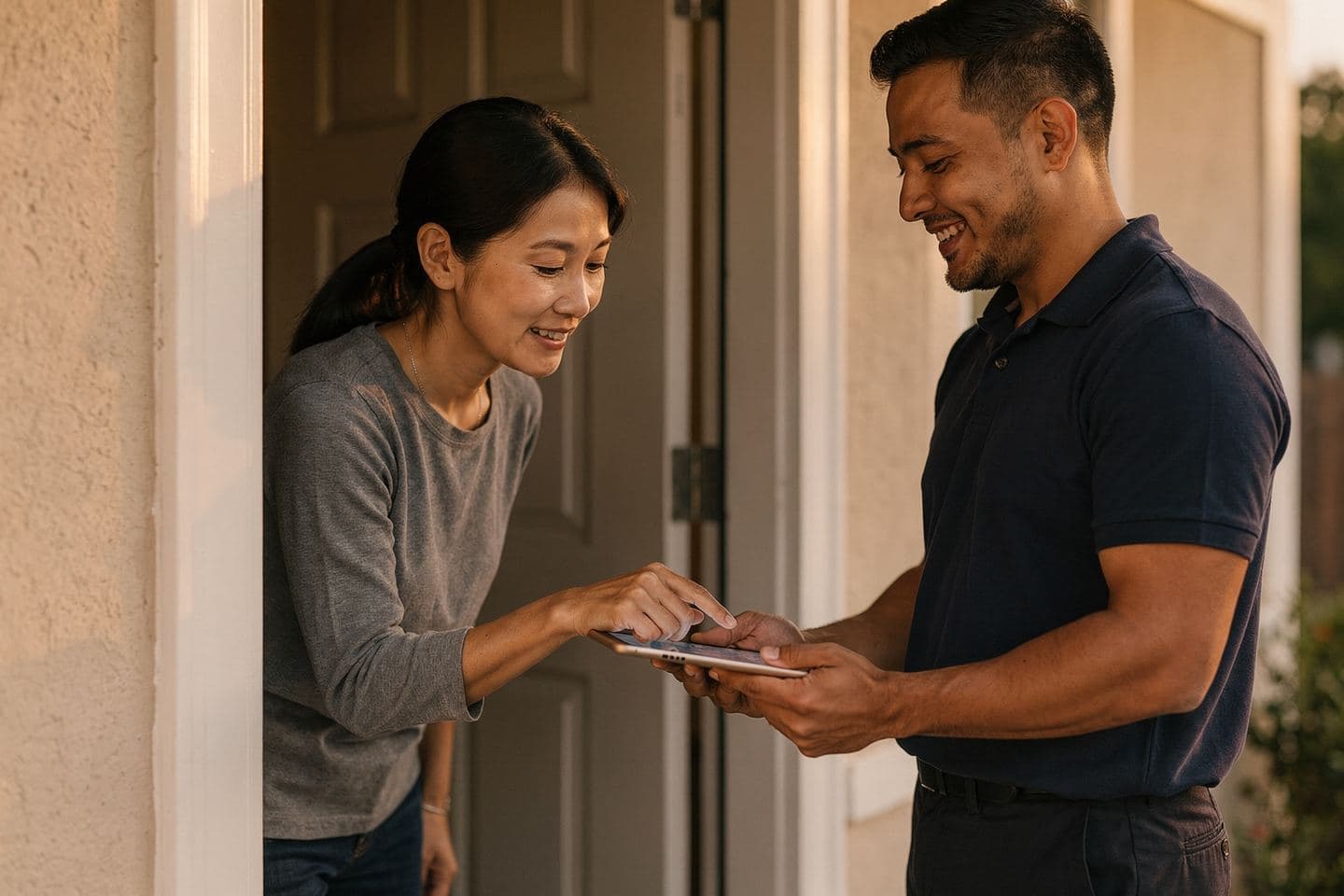
D2D conversion rate measures the percentage of door-to-door sales interactions that result in a closed deal. The basic formula is simple: divide total closed deals by total doors knocked, then multiply by 100. If a rep knocks 200 doors in a week and closes 8 deals, their conversion rate is 4%.
This metric is the single most important number in any door-to-door sales operation. It determines revenue per rep, territory efficiency, and team profitability. According to SPOTIO's 2026 sales statistics, door-to-door sales generate approximately $30 billion annually in the United States, with the global direct-selling market reaching $208.5 billion in 2025 and growing at a 6.4% CAGR through 2030.
What makes D2D conversion rate different from other sales metrics is the sheer volume of interactions involved. A field rep might knock 40 to 80 doors per day. Small percentage improvements translate into significant revenue changes across a team over a full season.
Why D2D Conversion Rate Matters for Field Sales Teams
Conversion rate is the lever that separates profitable D2D operations from ones that bleed money. A 20-rep pest control team averaging a 3% close rate versus a 5% close rate, assuming 60 knocks per rep per day and a $400 average deal, is leaving roughly $192,000 per month on the table. That math is why managers obsess over this number.
There are three reasons conversion rate matters more than raw activity metrics like doors knocked or hours in the field:
-
It reveals rep quality. Two reps can knock the same number of doors, but if one closes at 2% and another at 6%, the gap is not effort. It is skill at the door: opener quality, objection handling, reading the prospect, and asking for the close.
-
It predicts team economics. Most D2D operations break even in months 4 to 6 if close rates exceed 20% on engaged prospects and average deal size is above $3,000. Below those thresholds, unit economics deteriorate fast.
-
It compounds with coaching. According to research from Cirrus Insight, teams using AI-powered coaching improve win rates by 34% within six months. That lift, applied to every rep across every territory, fundamentally changes the business.
D2D conversion rate also matters because it is the clearest indicator of whether coaching and training investments are working. A company that rolls out new scripts or new technology should see conversion rate move within 30 to 90 days if the intervention is effective.
D2D Conversion Rate Benchmarks by Industry
Not all door-to-door verticals perform the same. Conversion rates vary based on ticket size, product complexity, seasonality, and how much trust the prospect needs to build before buying. Here are the 2026 benchmarks based on available industry data.
| Industry | Avg Knock-to-Close Rate | Top Performer Rate | Avg Deal Size |
|---|---|---|---|
| Pest Control | 3-5% | 15-25% | $300-$600 |
| Solar | 1-3% | 10-20% | $15,000-$30,000 |
| Roofing | 2-4% | 15-25% | $8,000-$15,000 |
| HVAC | 2-4% | 12-20% | $5,000-$12,000 |
| Home Security | 3-6% | 20-30% | $500-$1,500 |
| Telecom/Internet | 4-8% | 20-30% | $50-$150/mo |
Lower-ticket, lower-complexity products like pest control and home security convert at higher rates because the buying decision is smaller. Solar, roofing, and HVAC involve larger commitments and longer decision cycles, which push baseline conversion rates lower but reward top performers with much higher deal values.
According to WebFX's 2026 home services benchmarks, plumbing and pest control companies converting digital leads see 12 to 15% conversion rates, which provides useful context: D2D conversion rates measure a colder interaction (unsolicited knock) versus inbound leads, which is why the percentages are lower.
What Separates a 2% Rep from a 20% Rep
The gap between average and top-performing D2D reps is enormous. Understanding what drives that gap is the key to improving team-wide conversion rates.
Contact rate optimization. Top reps knock at the right times. KnockBase research confirms that weekday afternoons (4 to 7 PM) and Saturday mornings (10 AM to 1 PM) produce the highest contact rates. A rep who knocks at 11 AM on a Tuesday is talking to fewer people than one who adjusts their schedule.
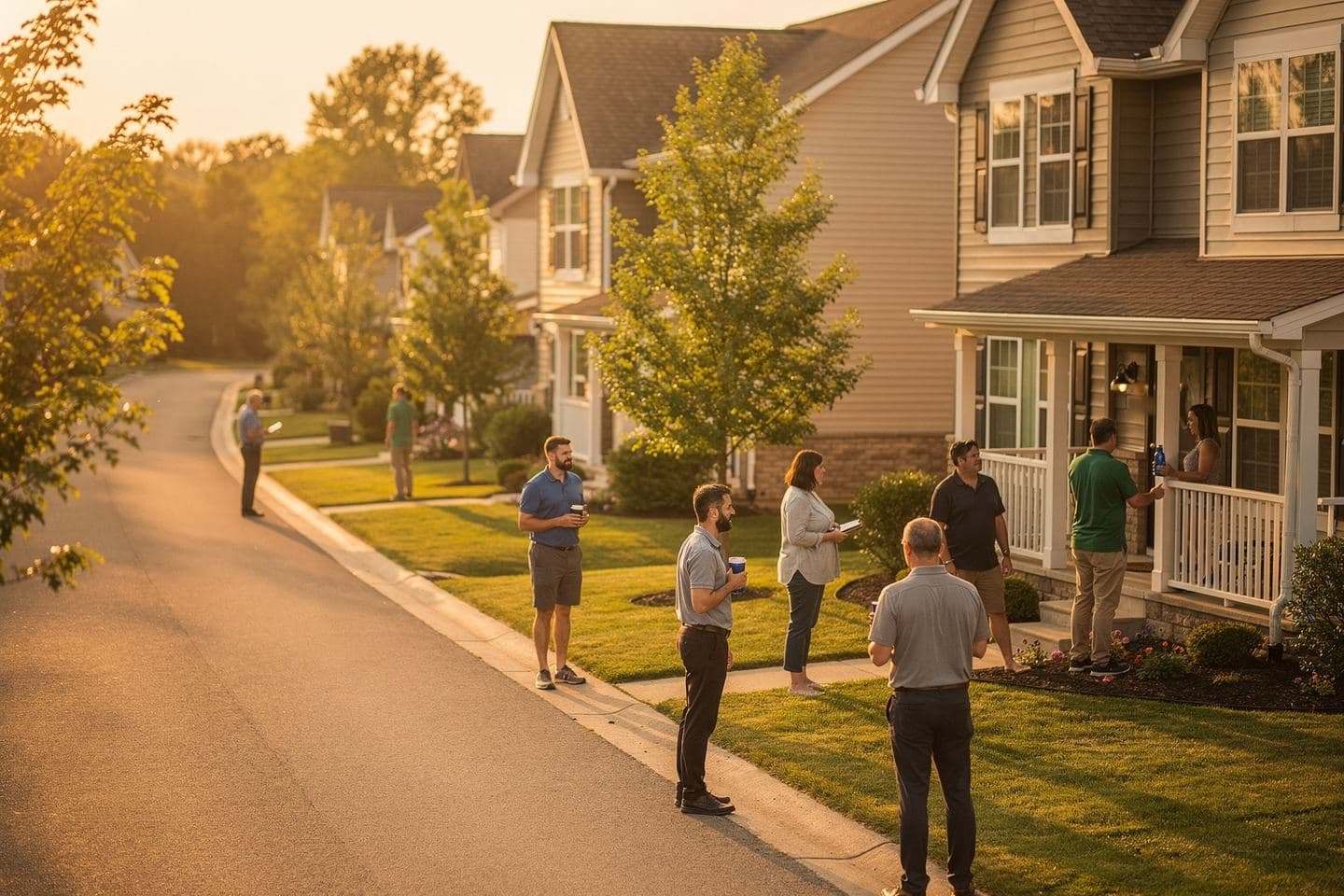
Multiple touches. Successful reps canvass a neighborhood three times and talk with 90% of residents, yielding roughly one lead per 50 knocks. Most reps give up after one pass and miss the majority of potential customers.
Stage-level skill. Conversion rate is not one skill. It is a chain of micro-conversions: getting the door answered, holding attention past the opener, building enough value to earn a sit-down, handling objections without folding, and actually asking for the close. Weakness at any stage leaks prospects out of the funnel.
Consistent practice. According to data from Career Trainer, reps receiving coaching achieve 107% of quota compared to 88% without coaching. Reps who receive AI-driven coaching recommendations improve performance 2.8 times faster than those relying on traditional methods alone, and they practice skills 5.3 times more frequently.
This is where tools that close the coaching loop automatically have the biggest impact. When a rep's specific weak point (say, handling the "I need to talk to my spouse" objection) gets identified from recorded conversations and turned into a targeted training exercise, the improvement cycle compresses from months to weeks.
How AI Coaching Tools Improve D2D Conversion Rates
The connection between AI coaching and conversion rate improvement is well-documented. Coached reps demonstrate 42% higher conversion rates from opportunity to close, and AI conversational coaching tools specifically increase sales call conversion rates by approximately 30%, according to Sopro's 2026 AI sales statistics.
The mechanism is straightforward: AI tools record every conversation, identify exactly where each rep loses deals, and generate targeted practice for those specific failure points. This is fundamentally different from a manager reviewing a handful of ride-alongs and offering general feedback.
For D2D teams, several platforms address this space:
- Rilla and Siro record and analyze field sales conversations, giving managers dashboards and scorecards. The coaching itself still falls on managers to deliver.
- Roonly takes a different approach by connecting analysis directly to training. After scoring a conversation, it auto-generates personalized AI roleplay and Duolingo-style lessons from the rep's actual data. The AI roleplay responds in under two seconds with 500+ dynamic personas, so reps can practice their weak points immediately without waiting for a manager.
The practical difference: a platform that only analyzes gives you data. A platform that also trains gives you conversion rate lift. Companies using comprehensive AI coaching report 353% ROI within the first year and see quota achievement improve by 30% across the team.
Common Misconceptions About D2D Conversion Rates
"A 2% conversion rate means D2D does not work." This misreads the metric. A 2% knock-to-close rate across 60 daily knocks means roughly one deal per day. At a $400 average ticket, that is $8,000 per month in revenue from a single rep. D2D conversion rates look low compared to inbound sales because they measure unsolicited interactions, but the volume makes the economics work.
"Conversion rate is all about the script." Scripts matter, but they are one variable among many. Territory selection, timing, contact rate, body language, tone, objection handling, and follow-up all affect conversion. A rep with a perfect script who knocks at the wrong time or in the wrong neighborhood will underperform a less polished rep in a better territory.
"You cannot meaningfully improve conversion rate after the first few months." Data says otherwise. Teams implementing AI coaching for field sales see measurable improvement even among experienced reps. The 34% win rate improvement within six months stat applies to entire teams, not just new hires. Experienced reps often have blind spots that only surface when every conversation gets analyzed.
"More knocks always beats a higher close rate." Activity matters, but the math favors conversion rate improvements. Increasing knocks from 60 to 80 per day (a 33% increase in effort) adds fewer deals than improving close rate from 3% to 5% (a 67% increase in results per knock). Smart teams focus on both, but conversion rate leverage is higher.
"Tracking conversion rate is too complicated for field teams." Modern D2D CRM tools and AI coaching platforms track this automatically. Reps record their shifts, the system logs doors knocked and deals closed, and the conversion rate updates in real time. No spreadsheets required.
Frequently Asked Questions
What is a good D2D conversion rate?
A good D2D conversion rate ranges from 5 to 10% knock-to-close for an average-performing team. Top-performing teams and reps regularly exceed 15 to 20%. The baseline of 2 to 3% is typical for new reps or unoptimized operations. Any team consistently above 5% is performing above the industry average.
How do you calculate D2D conversion rate?
Divide the number of closed deals by the total number of doors knocked, then multiply by 100. For example, 10 sales from 300 knocks equals a 3.3% conversion rate. Track this metric daily, weekly, and monthly to identify trends and the impact of coaching or script changes.
What factors most affect D2D conversion rate?
The biggest factors are timing (knocking when people are home), territory quality (demographics and need), opener effectiveness, objection handling skill, and follow-up persistence. Teams that canvass neighborhoods multiple times and knock during peak hours (weekday evenings and Saturday mornings) see significantly higher rates.
How quickly can AI coaching improve D2D conversion rates?
Most teams see measurable improvement within 30 to 90 days of implementing AI coaching. New rep onboarding benefits fastest, with ramp time dropping by as much as 70%. Across full teams, studies show a 34% improvement in win rates within six months of adoption.
Does D2D conversion rate vary by season?
Yes. Most D2D verticals see seasonal variation. Solar and roofing peak in spring and summer when homeowners are thinking about exterior projects. Pest control spikes in warmer months when bugs are visible. HVAC sees peaks in extreme weather months. Smart teams adjust their conversion rate targets by season rather than holding a flat benchmark year-round.
What is the difference between knock-to-close rate and sit-to-close rate?
Knock-to-close rate measures total doors knocked against total deals closed. Sit-to-close rate measures only the prospects who agreed to a full presentation (a "sit") against those who bought. Sit-to-close rates are much higher, often 30 to 50% for strong reps, because the prospect has already shown interest. Both metrics matter: knock-to-close shows overall efficiency, while sit-to-close isolates presentation skill.
How does D2D conversion rate compare to other sales channels?
Door-to-door sales convert 2 to 5 times better than digital channels on a per-interaction basis, though digital channels reach more people at lower cost. D2D's advantage is the in-person trust factor: prospects who open the door and engage with a rep are far more likely to buy than someone who sees an online ad. The direct-selling industry's continued growth to over $208 billion globally reflects this persistent advantage.
Related guides

Last updated March 11, 2026.
See what Roonly finds in your team's conversations.
Roonly coaches every in-person sales conversation and trains each rep on exactly where they lose the sale.
Book a demo